Spring in Hong Kong can be very humid; there are moisture-proofing steps to take before and after storing items.
Short answer
To prevent dampness in storage, first treat the moisture in the items themselves, then choose appropriate packaging and environments; do not rely solely on plastic bags or desiccants. When organizing clothes, books, and furniture during the 'Return of the Moisture' season, clean and dry them first, avoid sealing in dampness, and check requirements by material; general air conditioning is not a guarantee of fixed humidity or complete mould prevention.
Key summary
- Dry the items first, then consider sealing and desiccants.
- Hygrometer readings must be understood in relation to location and continuous fluctuations.
- Paper, leather, and electronic equipment cannot share a single preservation standard.
- Isolate items with mould spots, do not mix them with other items.
1. Keep dry before storing
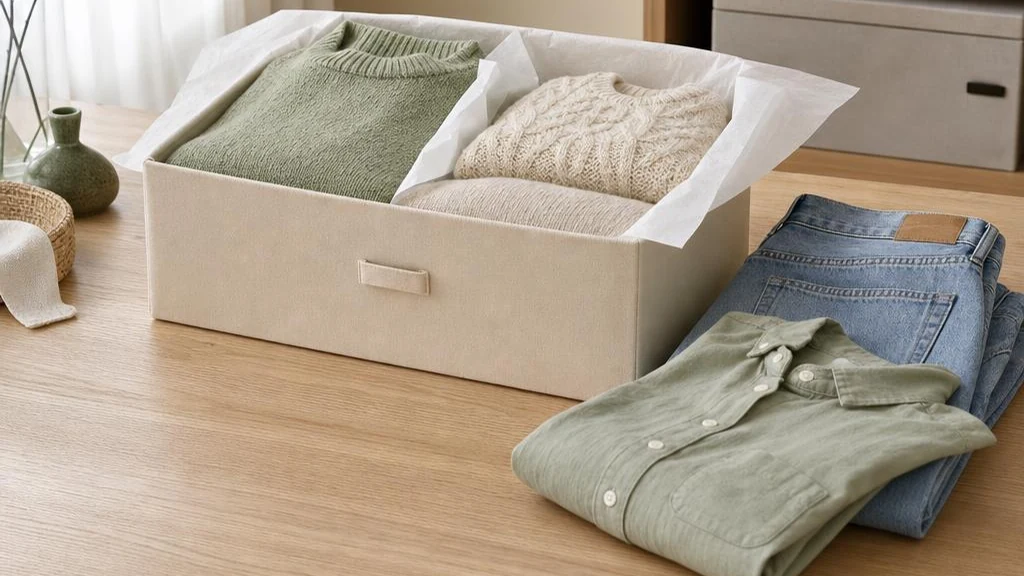
Items must be dry; wipe wooden items clean first.
2. Avoid sealing in moisture
Sealing items that aren't completely dry in plastic bags will easily trap moisture.
3. Choose an air-conditioned environment
Continuous air conditioning and humidity management help reduce the risk of mildew.
4. Why do items still get mouldy even when sealed in plastic bags?
Sealing only reduces exchange with the outside, it cannot automatically remove moisture already trapped inside the bag. If damp clothing, unfinished wood surfaces, or appliances with residual water are sealed inside, moisture can remain near the items, making the outside of the packaging feel dry while the interior remains damp.
Check slow-drying locations such as thick fabrics, wooden joints, drawers, and appliance conduits before packing. Do not make sealing immediately after cleaning a fixed procedure; drying time varies by material, weather, and method, and there is no universal waiting time for all items.
5. How should desiccants and hygrometers be used?
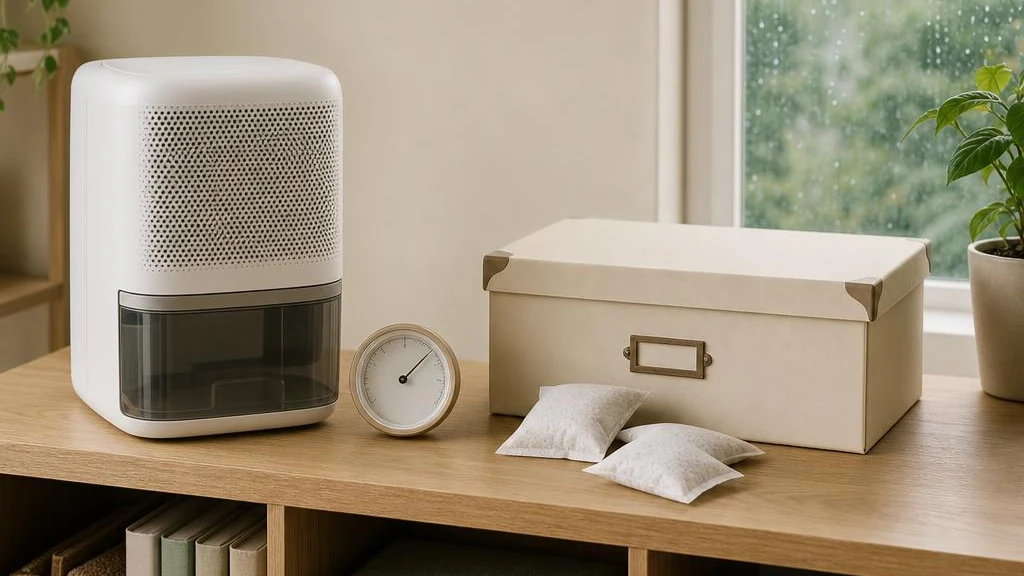
Use desiccants according to the product's applicable space, packaging, and replacement instructions, avoiding direct contact between powders or liquids and clothing, paper, or metal. Saturated products must be disposed of according to instructions; using more does not mean it will be effective in all situations.
Hygrometers should be read from representative positions, observing over different time periods rather than just once. Home instruments have precision and placement differences; do not treat the reading of one of your boxes as the specification for the whole warehouse; for strict preservation requirements, professional conditions should be ascertained.
6. What is the difference between air-conditioned storage and professional constant temperature and humidity storage?
Air conditioning can improve the environment, but it does not automatically guarantee specific temperature/humidity ranges, continuous monitoring, or applicability to all items. When enquiring about service, ask about actual management methods, rather than interpreting 'has air conditioning' as an unconditional guarantee against mould.
The Government Records Service preservation guidelines indicate that paper records require a dry environment, appropriate equipment, and air circulation; professional archive requirements cannot be directly equated to general household items or our company's service commitments. Collectibles, film negatives, or special paper items should be evaluated separately according to their preservation needs.
7. Three-stage inspection: Inbound, storage, and retrieval
Before inbound, record appearance, stains, and packaging condition; before sealing, remove damp items, food residue, and items that may leak. Do not mask problems with scents, especially for boxes that already show signs of mould, pests, or strong odours.
If regular inspections are scheduled, confirm availability and related costs first; door-to-door storage does not mean you can open the boxes at will. After retrieval, check items before mixing them with other belongings; if mould is found, isolate and seek appropriate cleaning or repair based on the material.
FAQs
- Is opening windows for ventilation enough to prevent dampness during 'Return of the Moisture'?
- Not necessarily. Outside air may be damp itself, so pay attention to indoor/outdoor conditions and material needs; do not treat 'opening windows' as a moisture-prevention method that works in all weather.
- Are plastic boxes definitely more mould-resistant than paper boxes?
- Do not look only at the container material. Plastic boxes will trap existing moisture, while paper boxes may absorb it; the key is that items are dry, the containers are appropriate, and the environment is managed. Neither has an absolute mould-prevention guarantee.
- Books already have a mouldy smell, can I put desiccants in directly?
- Desiccants cannot replace mould treatment. First, separate affected items; important books or documents can be referred to a preservation professional, avoiding further damage from manual wet wiping, bleaching, or sun exposure.
Further reading
The content of this article is for general reference only. Please determine actual arrangements based on item condition and the latest official guidelines.
Need to arrange storage for your items?
Tell us the item types and quantity, and we will help estimate the space and collection/delivery arrangements