
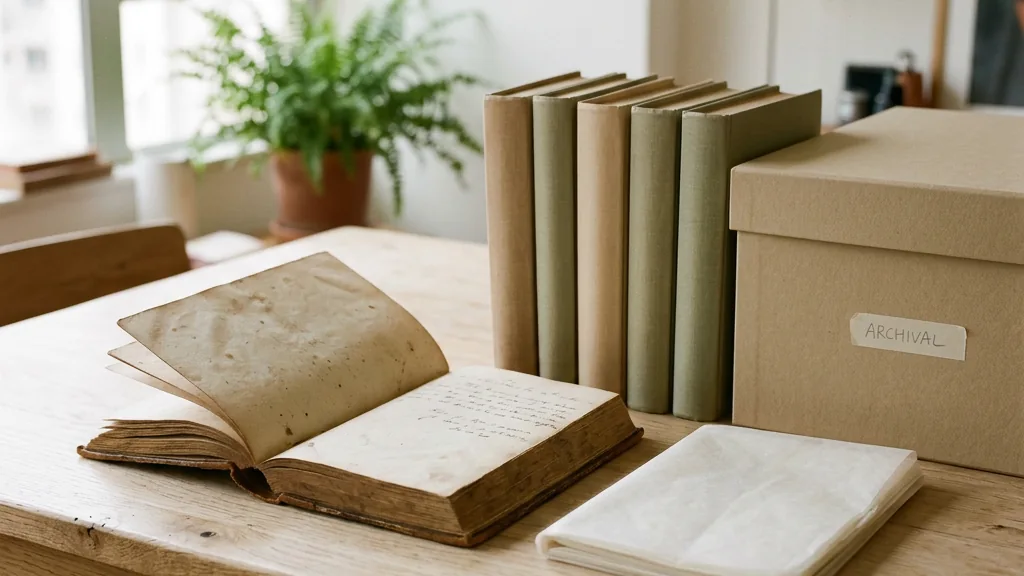
To manage an extensive book collection in limited space, consider digitizing content, prioritizing your core library, and using external storage for books that are not frequently accessed to balance your living environment.
For many book lovers or long-term magazine subscribers, the densely packed books on bookshelves at home are not only a treasure trove of knowledge but also carry countless warm memories of reading time. However, as the years go by, more and more books are bought, while Hong Kong's limited living space is rapidly saturating. Whenever faced with the choice of "decluttering," it is really hard to bear to treat these books that have accompanied you for many years as waste paper and recycle them. Faced with the dilemma of having no place for a large collection of books, if you don't want to throw them away heartlessly, there are actually not only the two extreme options of "keeping everything" or "throwing away everything." The following will deconstruct a compromise storage solution for you that takes into account both emotions and space.
Digital Scanning: Transforming Physical Memories into Lightweight Cloud Storage
If you are reluctant to part with the content or cover design of the books but do not want to take up physical space, digitalization is the most practical compromise method today:
Use Professional or Mobile Scanning Tools: Use high-quality mobile scanning apps (or look for third-party book scanning services on the market) to digitize precious out-of-print books, old magazines, or notes page by page, and convert them into PDF or e-book formats.
Build an Exclusive E-book Library: Classify the scanned files and store them in the cloud drive or personal e-reader. This can not only preserve all content and read it anytime, anywhere, but also completely free up physical space.
Select "Core Collection": Strictly Implementing the 80/20 Rule
Not every book has the physical value that must be retained. When packing, you might as well carry out a rational screening of your book collection:
Define Retention Standards: Divide your book collection into "core collections with extremely high emotional value or out-of-print commemorative value" (such as signed books, out-of-print children's books, precious art albums), and "ordinary reading materials that can be found in libraries or online at any time."
Streamline Retention Ratio: Strictly implement the 80/20 rule, keeping only the most essential 20% of physical books on the shelves or properly stored, while the remaining 80% can be circulated through gifting, donation, or second-hand bookstores, allowing the books to find the next owner who cherishes them.
Proper Packing and Environmental Control: The Art of Storing Physical Books
For physical books you choose to keep but cannot currently house at home, proper packaging and environmental control can help reduce the risk of humidity-related damage.
Avoid Using Large Boxes: Books are extremely heavy. When packing, avoid using excessively large cartons; otherwise, the bottoms are prone to breaking during transport. You should choose small and medium-sized sturdy cartons, and the weight of each box should not be too heavy.
The humid climate in Hong Kong can affect books. Before packing, ensure books are completely dry, use appropriate moisture-resistant materials, and seal containers thoroughly to minimize exposure to air.
Make Good Use of External Space: Smart Storage to Say Goodbye to Squeezing
When the bookshelves at home are already overloaded, and the physical books you have carefully selected cannot bear to be given away, transferring them to an external dedicated space is the best solution:
Create a Personal Mobile Library: Categorize and pack professional books, book sets, or old magazines that you don't frequently read for the time being but don't want to part with, and store them neatly in an external storage space with strict temperature and humidity control.
Regular Rotation for Reading: Through this method, the space at home is no longer oppressed by piles of old books, and your book collection receives the most professional protection, which can be retrieved and read anytime when needed.
Handling large, heavy collections can be physically demanding. If you have a large volume of books, consider seeking assistance from professional moving or storage teams to ensure the process is managed safely.
Faced with a massive and heavy mountain of books, relying solely on individual strength to classify, pack, and move is not only extremely physically draining, but any slight carelessness can also lead to back injuries. When you are faced with a large number of books that need to be decluttered and transferred, seeking assistance from a high-quality mini storage team is the most effortless and safe solution. A professional mini storage team provides storage space equipped with 24-hour temperature control and strict moisture-proof and pest-proof systems, ensuring that your precious book collection is free from the erosion of Hong Kong's humid weather during the storage period, perfectly preserving every bit of reading temperature and memory.
One Plus One Storage Services
One Plus One Storage provides professional mini storage services, committed to providing citizens with flexible, convenient, and reasonably priced storage solutions. We have a deep understanding of the problem of land supply shortage in the process of urbanization in Hong Kong, as well as the status quo that the change in work mode has led to an increasing demand for home space by citizens. Therefore, we founded One Plus One Storage to respond to these growing needs.
Our mini storage covers a variety of sizes. Whether customers need small storage space to store personal items or large storage space to store company documents or furniture, we can provide suitable solutions. In addition, our price setting is fair and transparent, and we provide flexible rental terms. Whether it is long-term or short-term rental, we allow customers to choose flexibly according to their own needs.
Welcome to request a quote or inquiry: Click to WhatsApp and contact us
- Address: Room 16-17, 9/F, Nan Fung Commercial Centre, 19 Lam Lok Street, Kowloon Bay
- Phone: 3188 1889
- WhatsApp: 6928 9628
- Email:enquiry@opostorage.com
Feel free to contact us anytime, and let us provide you with professional mini storage services
Practical storage and planning
- Digitize precious books or magazines to cloud storage to free up physical space.
- Categorize and retain only the most essential items based on emotional or practical value.
- Pack and transfer infrequently used books to professional storage facilities.
Frequently asked questions
How should I handle books that show signs of damage or yellowing?
Avoid DIY repairs to prevent further damage; it is recommended to consult with professional paper preservationists or conservators for proper assessment.
What should be kept in mind when packing books for external storage?
Use sturdy, appropriately sized cartons and ensure all books are completely dry before packing. Properly seal containers to mitigate exposure to ambient humidity.
Further reading: US National Archives guidance on storing papers and photographs; Canadian Conservation Institute guidance by material