
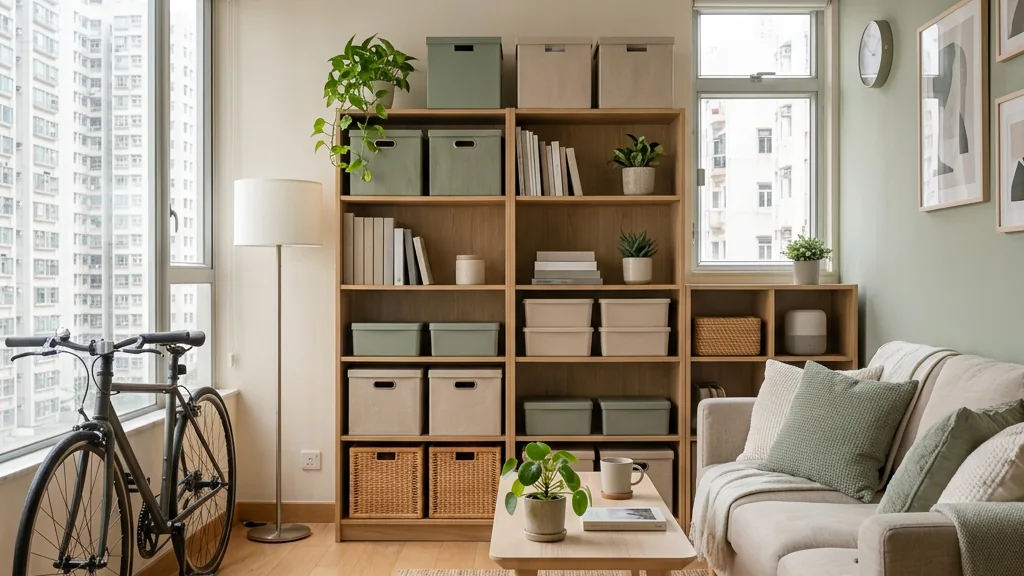
By communicating with elders and implementing a sorting strategy, moving rarely-used sentimental items to external storage can effectively improve home safety and living quality.
In Hong Kong's dense living environment, many families often face a tug-of-war for space between generations. Elders have experienced eras of relative material scarcity, and the old items accumulated often carry deep emotional memories. Whenever children try to clean up, the living room and rooms easily evolve into intense conflict points for items. This daily friction caused by "reluctance to throw things away" not only consumes each other's patience but also makes family relationships tense. Although there are psychological and communication difficulties in dealing with the accumulated materials of the elderly, as long as you master a few dimensions to evaluate and take gentle preventive measures, and through reasonable space strategies, you can often find a balance between respecting the emotions of the elderly and maintaining the quality of living, properly resolving this invisible family storm.
Analysis of the psychological mechanism of generational memory and object emotional connection
The attachment of the elderly to old objects, from the perspective of psychology and behavioral habits, is often not simple hoarding, but a manifestation of viewing objects as an extension of self-identity and a repository of security. For the older generation who have gone through difficult years, every yellowed letter, old appliance, or damaged garment marks a specific life stage and footprints of struggle. When children try to "declutter" or discard these objects directly, the elderly are prone to interpret it emotionally as a denial of their own value, thus generating strong defensive and confrontational emotions. When dealing with such conflicts, if radical means are used to clean up, it will often destroy mutual trust. Therefore, understanding the emotional weight behind the objects and treating them as "memory assets" that need to be gently placed is the first step in resolving family contradictions.
In addition to emotional tug-of-war, accumulating large quantities of old items at home introduces physical environmental risks. In Hong Kong's humid climate, stacking paper, clothes, or wooden items in corners or corridors can hinder indoor air circulation and lead to moisture buildup. Many aging materials may affect indoor environmental quality in poorly ventilated spaces. Furthermore, excessive clutter obstructs daily movement, increasing the risk of tripping for the elderly. Moving low-frequency items with sentimental value to an external space is a practical approach to protecting the home environment and physical safety. If items show signs of damage, consult a professional conservator for proper assessment.
In addition to the tug-of-war at the emotional level, the long-term accumulation of a large number of old items at home will also bring physical environmental risks that cannot be ignored. The climate in Hong Kong is humid. When a large amount of paper, old clothes, or wooden clutter is piled up in corners, under beds, or in corridors, it is very easy to hinder air convection indoors, leading to moisture accumulation.
Many old items (such as chemical fiber textiles, old plastics, or leather products) will accelerate aging and release tiny dust or mold spores in an environment with poor ventilation and large temperature and humidity fluctuations, which may pose a potential threat to the respiratory health of the elderly. In addition, too much clutter will seriously affect the daily flow of movement at home, increasing the risk of the elderly tripping in dark nights or narrow passages.
Therefore, moving some old items that are used at low frequency but have emotional value to an external space with constant temperature and humidity conditions is, from a physical environmental perspective, a disguised protection of the health of the elderly.
Key points for screening and psychological construction investigation before family communication
Before communicating with the elderly and organizing, children must first do a good job in objective self-investigation and strategic planning. It is generally recommended to adopt a gentle policy of "diversion rather than discarding," first reaching a consensus with the elderly: it is not to "throw away memories," but to change a safer and more comfortable "home" for them. When categorizing, you might as well accompany the elderly to classify items into three categories: daily necessities used every day, emotional memorabilia that are occasionally remembered but occupy large space, and consumables that have lost their practical value and are damaged.
Keep the first category by your side, handle the third category low-key when the elderly are not present, and put forward a compromise plan of renting a storage unit for the second category. Through this gradual guidance, the defensive mentality of the elderly can often be greatly reduced, making communication smoother.
Benefit and risk balance assessment
Faced with the piles of old items of the elderly at home, blindly and forcibly cleaning them up is easy to trigger serious family conflicts, but allowing them to continue to eat away at the limited living space will make the quality of life of the whole family drop significantly. In this case, one might as well objectively weigh the long-term time cost, the economic expenditure of renting a storage unit, and the invisible value of maintaining family harmony. Moving those memorabilia that occupy the living room and bedroom but are rarely used once a year to a professional storage unit, although it requires a certain rental cost, can exchange for spacious activity circulation at home and peaceful parent-child relationships. This approach of using spatial buffering to resolve emotional collisions is often a long-term solution with higher cost-effectiveness.
Seeking help from a professional team
When faced with the deep emotional obsession of the elderly and the house full of stacked old items, and the own communication time and energy are limited, seeking the help of an external professional team may bring a turning point for the deadlock. Professional consultants can not only provide objective environmental and item assessments in advance but also assist family members in formulating transfer plans that take into account both the emotions of the elderly and space efficiency. Through professional, polite, and gradual assistance, effectively reduce friction and risks in the process, and safely find an ideal home for the precious memories of the elderly. Feel free to contact our professional team at any time to explore more flexible and warm home storage solutions together.
One Plus One Storage Services
One Plus One Storage provides professional storage services, committed to providing citizens with flexible, convenient, and reasonably priced storage solutions. We deeply understand the problem of land supply shortages in Hong Kong's urbanization process, as well as the status quo that the change in working patterns leads to an increasing demand for home space by citizens. Therefore, we established One Plus One Storage to respond to these growing needs.
Our storage units cover a variety of sizes. Whether customers need small storage space to store personal items, or large storage space to store company documents or furniture, we can provide suitable solutions. In addition, our pricing is fair and transparent, and we provide flexible lease terms. Whether it is long-term or short-term leasing, it allows customers to flexibly choose according to their own needs.
Welcome for quotation or inquiry: Click to contact us on WhatsApp
- Address: Room 16-17, 9/F, Nan Fung Commercial Centre, 19 Lam Lok Street, Kowloon Bay
- Tel: 3188 1889
- WhatsApp: 6928 9628
- Email:enquiry@opostorage.com
Feel free to contact us at any time, let us provide you with professional storage services!
Practical storage and planning
- Establish a consensus with the elder that sorting does not equate to disposal.
- Categorize items into daily necessities, sentimental memorabilia, and items for removal.
- Relocate sentimental memorabilia to an external storage unit to reclaim living space.
Frequently asked questions
What if the elder strongly opposes moving items?
Avoid forceful removal. Focus on home safety and accessibility, and consider seeking professional organizing assistance for an objective assessment.
Is a storage unit a permanent solution for hoarding?
Storage units provide temporary space relief. Regularly review stored items for potential damage and assess if they retain actual value for the future.
Further reading: US National Archives guidance on storing papers and photographs; Canadian Conservation Institute guidance by material