
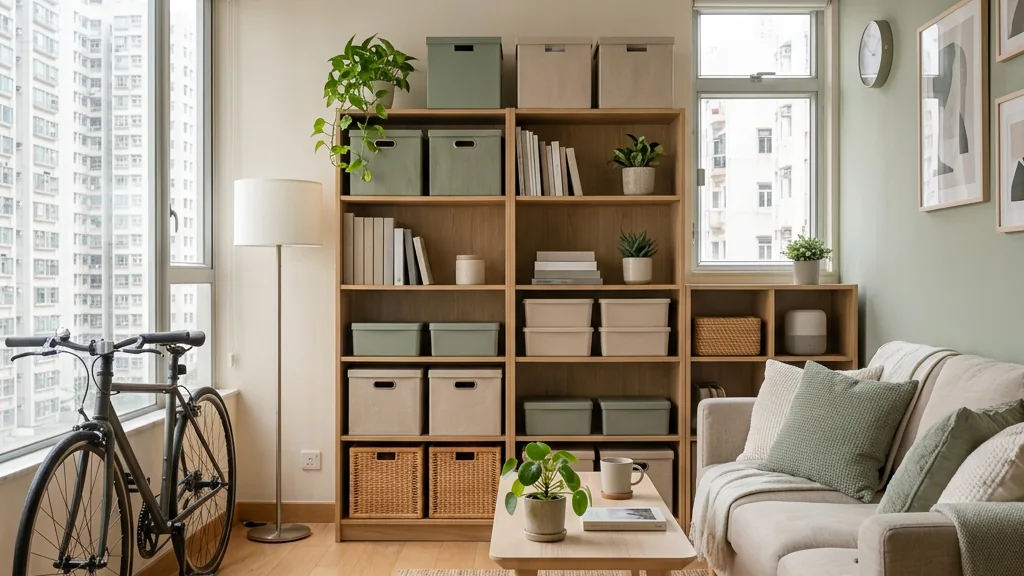
Deciding whether to store or discard depends on an object's usage frequency and your space value. If items are functional and required later, storage is an option; otherwise, decluttering is recommended to reclaim living space.
In Hong Kong, where every inch of land is worth gold, home space is often filled with various materials without notice. Living room aisles become narrower, and storage cabinets often face the crisis of bursting. Whenever faced with a house full of clutter, many citizens often fall into a dilemma: should they spend money to rent a long-term mini-storage unit to house these items, or make a ruthless decision to perform a thorough decluttering? This kind of space choice is often accompanied by double considerations of monetary expenses and emotional tugs-of-war. Although there may be judgment myths and processing difficulties in the decision-making process, as long as you master a few dimensions to objectively evaluate the actual value and usage frequency of items, and take corresponding preventive measures, you can properly solve the problem of space overload and reshape a comfortable sense of breathing for your home.
Analysis of the golden crossover point of item usage frequency and physical volume
A key physical dimension in evaluating storage needs is analyzing an item's usage frequency and space cost. Many items stored at home are large but rarely used. From a space-efficiency perspective, keeping bulky, low-frequency items in limited living areas may reduce comfort. Seeking external space for these items is a potential, rational choice.
The sunk costs and psychological space constraints behind emotional value
Another common myth lies in confusing the "emotional value" of an item with its actual "functional value." When facing old photo albums, souvenirs, or items gifted by elders, many people often choose to keep them all because they can't bear to let them go, even considering renting large storage units to house these memories. However, from the dual effects of psychology and physics, being overly obsessed with past objects often creates invisible constraints on the current living space.
If the probability of these objects being revisited or used in the future is extremely low, and you are paying long-term storage rent just for emotional sustenance, you may need to weigh whether this belongs to a disguised form of sunk cost. Objectively clarifying the fit between objects and current life often helps users distinguish which are precious assets worth properly preserving and which are traces of the past that can be discarded after being recorded in photos.
Three-dimensional self-screening points before the user makes a choice
Before renting a long-term storage unit, users should conduct a three-dimensional self-assessment. First, inventory all infrequent items and record their usage frequency. Second, evaluate the material's suitability for external environments; consult professionals for valuable or damaged items. Finally, calculate long-term costs against item value. These steps help clarify whether to store assets or clear out clutter.
Benefit and risk balance evaluation
Between deciding to rent long-term storage or perform a thorough decluttering, objectively measuring long-term time costs, potential damage risks, and economic benefits is crucial. While renting a long-term mini-storage unit can maintain the integrity of items, the monthly rent expenditure and the time cost of going regularly to organize cannot be ignored; conversely, excessively radical decluttering may make people feel "regret" later or require additional expenditure for re-purchasing. It is better to measure the current life stage and space load. If an object is irreplaceable or will be used frequently within the next few years, storage is a reasonable buffer; conversely, if the item has lost its functionality and will not be touched in the future, decisively discarding it can often lighten a lot of invisible burdens for life.
Seeking professional help
When facing complex space planning and the choice of whether to keep items, and when personal time and energy are limited, seeking help from external professional space planning and storage teams might be a compromise scheme that can inject clear ideas into life. Such professional teams usually possess rich on-site operational experience and meticulous craftsmanship, not only providing objective space evaluation and item classification suggestions during the process, but also effectively assisting users in avoiding potential risks caused by blind hoarding or improper storage. Through the guidance of professional consultants, users can find a balance between storage and decluttering more smoothly, safely, and efficiently solving space problems. Welcome to contact professional teams at any time to explore more flexible and suitable ideal life plans together.
One Plus One Storage Services
One Plus One Storage provides professional mini-storage services, committed to offering flexible, convenient, and reasonably priced storage solutions. We deeply understand the challenges of land shortages in Hong Kong's urbanization and the changing work patterns that have led to increasing needs for home space among citizens. Consequently, we created One Plus One Storage to respond to these growing demands.
Our mini-storage units come in various sizes. Whether clients need small storage spaces for personal items or large spaces for company documents or furniture, we can provide suitable solutions. Additionally, our pricing is fair and transparent, and we offer flexible lease terms, allowing clients to choose freely according to their own needs for both short and long-term rentals.
Welcome to request a quote or inquire: Click to contact us on WhatsApp
- Address: Room 16-17, 9/F, Nan Fung Commercial Centre, 19 Lam Lok Street, Kowloon Bay
- Tel: 3188 1889
- WhatsApp: 6928 9628
- Email:enquiry@opostorage.com
Welcome to contact us anytime, let us provide you with professional mini-storage services!
Practical storage and planning
- Inventory your belongings and record their actual usage frequency over the past year.
- Categorize items by size and frequency to determine which assets are truly essential.
- Seek professional advice for valuable or damaged items requiring specialized preservation.
Frequently asked questions
How should I decide if sentimental items are worth storing?
Assess the item's relevance to your current life; consider recording them as photos or keeping only a small selection of meaningful items.
Further reading: US National Archives guidance on storing papers and photographs; Canadian Conservation Institute guidance by material