
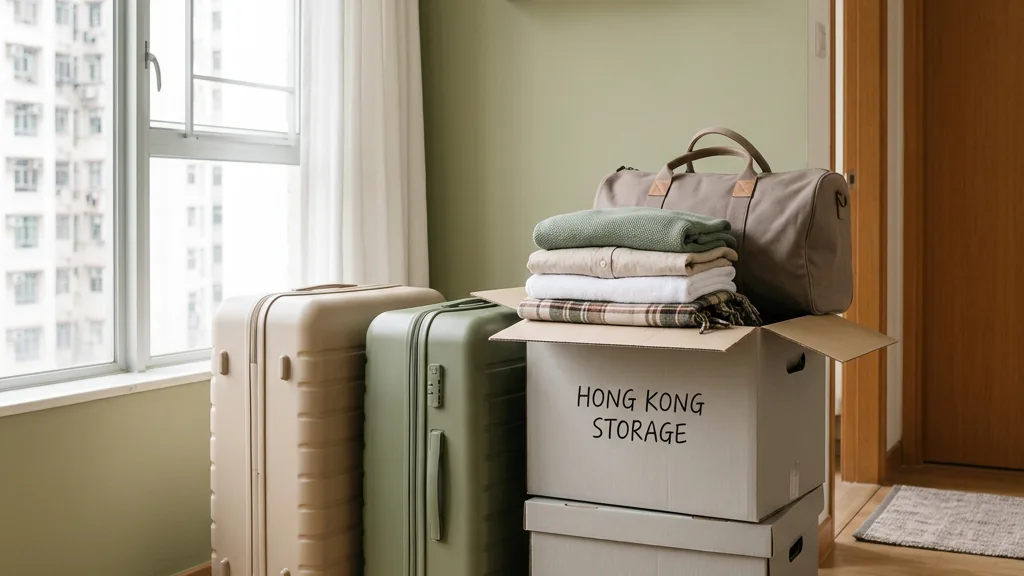
Large suitcases occupy valuable space and collect dust when kept in the bedroom. We recommend nested storage or moving them to common areas, or consulting professional storage services if your home space is limited.
In a living environment where every inch of land is worth gold, how to properly utilize every square foot of space is a required course for every household. Large suitcases (or travel bags) over 28 inches are essential tools for traveling abroad, visiting relatives overseas, or long-distance business trips, but the actual frequency of use for such large items may only be once or twice a year. For the remaining more than 300 days, this massive object lies quietly, gathering dust in bedroom corners, on top of closets, or under the bed.
Stuffing a large suitcase that is used less than twice a year into the bedroom not only extremely wastes golden living area but also has a negative impact on the bedroom's air quality, aesthetic appeal, and life flow. This article will deeply dissect the hidden pain points of placing suitcases in the bedroom, break common storage myths, and provide comprehensive space-releasing solutions and professional storage advice!
Why are large suitcases "space killers" and hygiene blind spots in the bedroom?
The bedroom is a private area for shedding fatigue and resting deeply every day. An ideal environment should remain simple, ventilated, and clean. However, the physical characteristics and usage habits of large suitcases are exactly the opposite of a healthy bedroom environment.
1. Expensive Opportunity Cost of Space
Suitcases consume hanging closet space or floor clearance; moving them out of the bedroom can effectively reclaim living area.
2. Invisible Carrier of Street Bacteria and Dust Mites
Suitcase wheels and shells accumulate outdoor dust. Maintain cleanliness and store in a tidy area, seeking professional advice if repairs are needed.
3. Creating Visual Oppression, Affecting Sleep Quality
Psychological research shows that messy or bulky items exposed in the line of sight will invisibly increase the brain's stimulation burden. Large hard-shell suitcases have rugged lines and a bulky volume. Placing them in a bedroom corner will destroy the cozy feel of the overall decoration and create a sense of anxiety about "moving at any time" or "crowded space," indirectly affecting your mood when falling asleep.
Taking Stock of Daily Storage Myths: Can suitcases only be kept in the bedroom?
Many homeowners, when planning furniture configuration, are accustomed to classifying suitcases as "clothing-related accessories" and thus take it for granted to squeeze them into the bedroom. The following are three of the most common suitcase storage myths:
Myth 1: Is stuffing them under the bed the most space-saving?
Reality: The height under the bed is limited, large suitcases often get stuck when pushed in; and the area under the bed easily accumulates dust. Dragging them out requires bending over, which easily scratches wood floors.
Myth 2: Stacking them on the highest part of the closet?
Handling large suitcases at heights poses physical risks. Evaluate your capability and seek assistance or choose ground-level storage instead.
Myth 3: Throwing them on the balcony or outdoor air conditioner unit space?
Balconies or outdoor areas involve fluctuating temperature and humidity. Store suitcases indoors in a stable environment to prolong their condition.
Bedroom Space Rescue! 3 Efficient Indoor "Fine-Tuning" Storage Methods
If you still want to keep your suitcase indoors for now, you must use smart combination logic and space fine-tuning to minimize its interference with living quality.
1. "Russian Nesting Doll" Nested Storage Method
This is the most classic space-doubling trick. The huge hollow space inside a large suitcase must never be left empty.
Carry-on Nesting: Embed 20-inch carry-on bags and 24-inch medium-sized suitcases layer by layer into the 28-inch large suitcase like nesting dolls.
Seasonal Soft Filling: If there are no small suitcases, seasonal thick quilts, down jackets, or camping sleeping bags sealed with compression bags can be stuffed into the large suitcase. This not only keeps the suitcase shell from being squeezed and deformed but also makes full use of every inch of air inside the box.
2. "Invisible and Traceless" Integration in Common Areas
Move the suitcase out of the bedroom and transfer it to non-core areas of the living room or entryway:
Entryway Base Cabinet with Doors: When custom-ordering an entryway shoe cabinet, leave an extra-deep, bottomless pull-out area at the very bottom that is 80cm high, specifically for pushing in large suitcases, making them easy to take when going out and put back when returning home.
Deep Areas Under Living Room Tatami Platforms: If the living room has a raised platform with a lifting table, the suitcase can be placed in the least frequently used, deepest grid of the platform, occupying absolutely no daily living traffic flow.
3. Cleverly Transforming into Practical Furniture
For single-occupancy units or those with industrial-style decor, certain hard suitcases with vintage textures or vintage leather appearances can be directly paired with wood or metal stands and transformed into side tables, coffee tables, or bedside storage platforms in the living room, turning the pure storage burden into a home decoration highlight.
Benefit Comparison of Various Large Suitcase Storage Solutions
To let you intuitively choose the most suitable disposal method, the following is a comprehensive benefit analysis of different storage paths:
Storage Solution | Space Release Level | Convenience of Access | Environmental Safety (Moisture/Dust Proof) | Overall CP Value |
Place in Bedroom Closet/Under Bed | ★☆☆☆☆ (Extremely space-occupying) | ★★★★☆ (Accessible anytime) | ★★☆☆☆ (Easy to collect dust/dampness) | Low (Space cost is too high) |
Move to Entryway/Under Platform | ★★★☆☆ (Release bedroom) | ★★★☆☆ (Requires moving platform) | ★★★☆☆ (Depends on home environment) | Medium (Requires preliminary renovation planning) |
Traditional Self-Storage | ★★★★☆ (Zero burden on the whole house) | ★★☆☆☆ (Requires personal transport) | ★★★★☆ (Constant temperature and humidity) | Medium (Requires monthly fee for the whole unit) |
Door-to-Door Storage Box Service | ★★★★★ (100% Release space) | ★★★★★ (Mobile booking, staff delivers to door) | ★★★★★ (Professional storage control) | Extremely High (Most cost-effective by-item billing) |
4 Maintenance and Care Steps Before Long-Term Sealing of Suitcases
Regardless of whether you are preparing to place the suitcase in a high cabinet, entryway, or external warehouse, before long-term sealing, you must complete the following four steps of maintenance, otherwise, you may face problems such as moldy inner linings, jammed wheel skins, or unpleasant odors when opening it again a year later:
Step 1: Deep Disinfection and Cleaning of Wheels and Shell
Regularly inspect the condition of wheels and the shell. Wipe clean when necessary, and contact professional repair services for component maintenance.
Step 2: Thorough Drying and Odor Removal Inside the Case
Ensure the interior is dry before storage. Avoid using products with strong chemical odors that may permeate the fabric lining.
Step 3: Maintenance of Zippers and Combination Locks
Check that zippers and locks operate smoothly. Do not force them if resistance is felt; inspect for debris instead.
Step 4: Wrapping with Non-Woven Dust Cover
Use a breathable dust cover for the suitcase; avoid airtight plastic bags to maintain necessary airflow within the storage space.
Seeking Assistance from a Professional Team
For urban families with a fast-paced life and extremely limited living space, packing, moving, and finding a suitable place to store large suitcases yourself is often time-consuming and laborious. If you want to thoroughly move large suitcases and other low-frequency miscellaneous items out of your home, seeking a professional storage team with extensive experience is the best solution to achieve "zero burden in the bedroom." Enjoy an ideal home life that is pressure-free, refreshing, and full of breathability!
One Plus One Storage Services
One Plus One Storage provides professional mini storage services, committed to offering flexible, convenient, and reasonably priced storage solutions to the public. We have a deep understanding of the problem of land supply shortages during Hong Kong's urbanization process, and the reality that changes in working patterns have led to an increasing need for home space among the public. Therefore, we founded One Plus One Storage to respond to these growing demands.
Our mini storage covers various sizes. Whether clients need small storage space to store personal items or large storage space to store company documents or furniture, we can provide suitable solutions. In addition, our pricing is fair and transparent, and we provide flexible lease terms. Whether it is long-term or short-term leasing, it allows clients to choose flexibly according to their own needs.
Welcome to request a quote or inquiry: Click to contact us via WhatsApp
- Address: Room 16-17, 9/F, Nan Fung Commercial Centre, 19 Lam Lok Street, Kowloon Bay
- Tel: 3188 1889
- WhatsApp: 6928 9628
- Email:enquiry@opostorage.com
Feel free to contact us anytime, and let us provide you with professional mini storage services
Practical storage and planning
- Use nested storage by placing smaller bags or seasonal soft items inside your large suitcase.
- Store the suitcase in a dry, accessible area that does not impede traffic flow in your home.
- Seek professional storage services for high-value items to ensure proper handling and secure storage conditions.
Frequently asked questions
What are basic precautions for storing suitcases at home?
Clean the exterior, cover with a breathable dust bag, and store in a dry, ventilated, and shaded area to maintain stability.
What should I consider when moving large items to professional storage?
Measure your space requirements and select a storage provider that offers door-to-door transportation to minimize handling risks.
Further reading: US National Archives guidance on storing papers and photographs; Canadian Conservation Institute guidance by material