
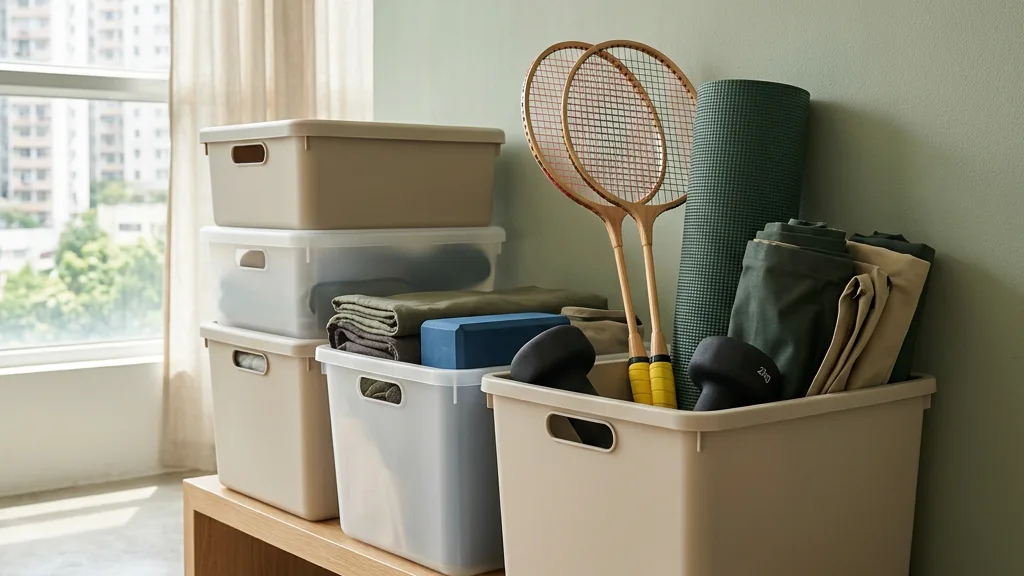
Avoid long-term tight folding to prevent structural collapse and loss of elasticity. Use wide-shoulder hangers for vertical storage or roll loosely with padding to maintain shape and insulation.
Whenever summer or a long holiday approaches and you are getting ready to go scuba diving at Sharp Island in Sai Kung, or flying to Okinawa or Cebu to enjoy the underwater world, many Hong Kong diving enthusiasts will rummage through their belongings early to prepare their expensive gear. However, the moment you open the transparent plastic box or travel bag under the bed, your heart sinks: the 3mm or 5mm wetsuit that was originally flat and form-fitting, custom-made for several thousand dollars, has developed deep, hard 'white dead creases' on the elbows, knees, and chest areas because it has been sealed away for the whole winter!
Even if you pull it by hand or soak it in water, the dents remain as stubborn as ever, feeling thinner than before. Wearing it is not only unsightly, but after getting into the water, you find that the creases let in icy water, significantly reducing thermal insulation performance. Why do wetsuits produce permanent, difficult-to-flatten indentations when stored folded for a long time? What is the physical truth of materials science behind this?
Opening the box on the eve of setting sail and seeing deep dead creases? Deconstructing the truth of collapsed micro-pores in neoprene foam
The core material of wetsuits is neoprene, which relies on its structural elasticity for insulation. When a wetsuit is stored under heavy, concentrated pressure for long periods, the material can lose its shape and resilience, resulting in persistent creases that are difficult to remove.
Why don't the creased marks bounce back even after soaking in water? Deconstructing the permanent damage of long-term heavy pressure on the micro-pore structure
Long-term static compression may cause fatigue in the material, reducing its ability to recover its original shape. If the wetsuit exhibits signs of structural breakdown, it is advisable to store it in a ventilated space without pressure, or seek guidance from professional maintenance services.
Warm water soaking or hanging on a thick rack?
For daily maintenance, you can implement the following standardized care procedure: First, for indentation emergency care, if the indentation has not been formed for long, you can try soaking the wetsuit in warm, fresh water at 30 to 35 degrees Celsius for about 30 minutes, using moderate warmth to allow the rubber molecules to slightly soften and relax, then hang it in a cool, ventilated place using a 'thickened wide-shoulder diving-specific hanger', using the natural gravity of the wet wetsuit to pull downward evenly, slowing the depth of the crease; second, if the home space is insufficient for long-term hanging, a safe compromise storage method is 'roll-style storage'.
Just like storing a yoga mat, cushion the joint folds with large bath towels, roll the wetsuit loosely from the legs upward, and put it into a breathable mesh bag. Stacking heavy objects on top is strictly prohibited. However, never iron the wetsuit directly with a household steam iron! The high-temperature metal base plate will instantly melt the surface fabric and the internal foam layer when it touches the neoprene; also, do not put it in a dryer for high-temperature drying, as the rotating drum's pulling will only accelerate rubber embrittlement and cracking.
Comparison of outdoor anti-cold clothing storage methods: Folding into a box, rolling up, and vertical hanging—how different are they?
There are various ways to store wetsuits and various types of water sports anti-cold equipment, and different storage forms have a decisive impact on equipment life, thermal insulation, and anti-indentation performance. To help every Hong Kong water sports enthusiast have a better sense of direction, we have organized a detailed comparison list of common storage modes to help you accurately assess which strategy best meets your equipment maintenance needs:
Wetsuit storage and preservation method 🤿 | Physical stress characteristics and micro-pore protection 💡 | Common limitations and potential risks ⚠️ | Professional advice strategy from our mini-storage team ✅ |
Long-term tight folding and stuffing into a plastic box | Occupies minimal space, surface is dust-proof | Air holes at the joints are permanently crushed and collapsed, greatly frustrating thermal insulation performance | Highly not recommended; this is the main culprit that destroys expensive custom-made wetsuits |
Towel-cushioned loose roll storage | Avoids sharp dead creases, distributes bending stress | The volume remains relatively large; need to ensure there is no crushing or deformation from heavy objects above | Suitable as a compromise anti-crease alternative when home closet space is limited |
Ordinary thin wire hanger household hanging | Saves floor space, keeps it vertically stretched | The contact area on the shoulders is too narrow; hanging for a long time easily pulls, deforms, and cuts the suit | Must be replaced with an extra-thick wide-shoulder hanger with a diameter of at least 5cm |
All-weather constant temperature and humidity vertical hanging | Special wide rack hanging, no compression, constant temperature and humidity | Requires payment for the corresponding exclusive storage space rent | Strongly recommended to maintain rubber elasticity long-term and prevent mold and dead creases |
Through the table above, it is clear that purely for convenience, tightly folding anti-cold clothing into a box easily causes irreparable structural damage; maintaining loose rolling or vertical hanging with a professional wide-shoulder hanger is the only way to maintain the full elasticity of neoprene long-term.
Seeking professional team help
In the inch-of-gold Hong Kong home environment, closets are often packed with daily suits and overcoats, making it impossible to clear enough vertical space with sufficient height and width for expensive equipment to hang naturally for years; if hung in a humid bathroom or an unventilated balcony, Hong Kong's hot and humid climate for half the year will accelerate rubber hydrolysis and mold, or even cause the glued seams to become brittle and leak. Instead of watching your beloved equipment—bought for several thousand dollars—develop dead creases, and worrying every time you open the box, why not entrust the preservation of your expensive outdoor sports gear to our professional mini-storage team? Fully release your home living space, allowing your wetsuit to stay in its peak state—three-dimensional, flat, and full of elasticity—whenever you take it out before going to sea.
FAQ
Q1: If the wetsuit already has obvious white dead creases, will it leak water directly and drown me when I wear it in the water?
A1: The principle of a wet wetsuit itself is to allow a trace amount of seawater to enter and be heated by body temperature to keep you warm; although the crease area will not lead to a direct hole, the rubber foam micro-pores at that location have been crushed and thinned, significantly decreasing the thermal and cold insulation ability. Seawater flowing through the crease will create a noticeable cold sensation, reducing overall anti-cold and thermal insulation performance.
Q2: Why must I absolutely never use ordinary wooden hangers or thin metal hangers to hang a wetsuit?
A2: Because wet or thick wetsuits are quite heavy. The contact area of ordinary thin hangers is extremely narrow, which will concentrate all the weight on two points on the shoulders. Hanging them for a long time will forcefully pull the shoulder rubber thinner or even cut it, forming permanent bulging deformation; the correct method is to choose a plastic thickened diving-specific hanger with a shoulder width of at least 8 to 10 centimeters.
Q3: How do I judge if the wetsuit rubber is so aged that it needs to be scrapped and replaced entirely?
A3: If you find that the surface of the wetsuit shows large areas of tiny crack patterns, the rubber feels hard, brittle, and lacks elasticity, cannot quickly bounce back after being gently pressed by a fingernail, or the waterproof tape at the seams is largely crumbling and de-gluing, it means that internal irreversible aging and hydrolysis have occurred in the material, and the thermal insulation and extensibility can no longer meet safety diving needs. It is recommended to replace it in a timely manner.
One Plus One Storage Services
One Plus One Storage provides professional mini-storage services, dedicated to providing citizens with flexible, convenient, and reasonably priced storage solutions. We have an in-depth understanding of the problems of land supply shortages in Hong Kong's urbanization process, as well as the current situation where changes in working patterns have led to an increasing demand for home space by citizens. Therefore, we created One Plus One Storage to respond to these growing needs.
Our mini-storage units cover a variety of sizes. Whether clients need small storage spaces for personal items or large storage spaces for storing company documents or furniture, we can provide suitable solutions. In addition, our pricing is fair and transparent, and we provide flexible lease terms. Whether it is a long-term or short-term lease, clients can flexibly choose according to their own needs.
Welcome to get a quote or inquire: Click to contact us via WhatsApp
- Address: Room 16-17, 9/F, Nan Fung Commercial Centre, 19 Lam Lok Street, Kowloon Bay
- Phone: 3188 1889
- WhatsApp: 6928 9628
- Email:enquiry@opostorage.com
Feel free to contact us anytime, let us provide you with professional mini-storage
"
Practical storage and planning
- Use a wide-shoulder hanger for vertical storage in a cool, ventilated area to maintain shape.
- If space is limited, use padding at the joints and store the wetsuit loosely rolled.
- Regularly check equipment condition and consult a professional for maintenance if material degradation is observed.
Frequently asked questions
Can deep creases in a wetsuit be fixed?
If creases are the result of physical compression, the material structure may have changed. While proper hanging may reduce visibility, if the integrity is compromised, consult a professional for advice.
What should be avoided during storage?
Keep the wetsuit away from high heat and humidity to prevent material degradation. Avoid stacking heavy objects on top and ensure the storage environment is not airtight to prevent mold growth.
Further reading: Canadian Conservation Institute guidance by material