
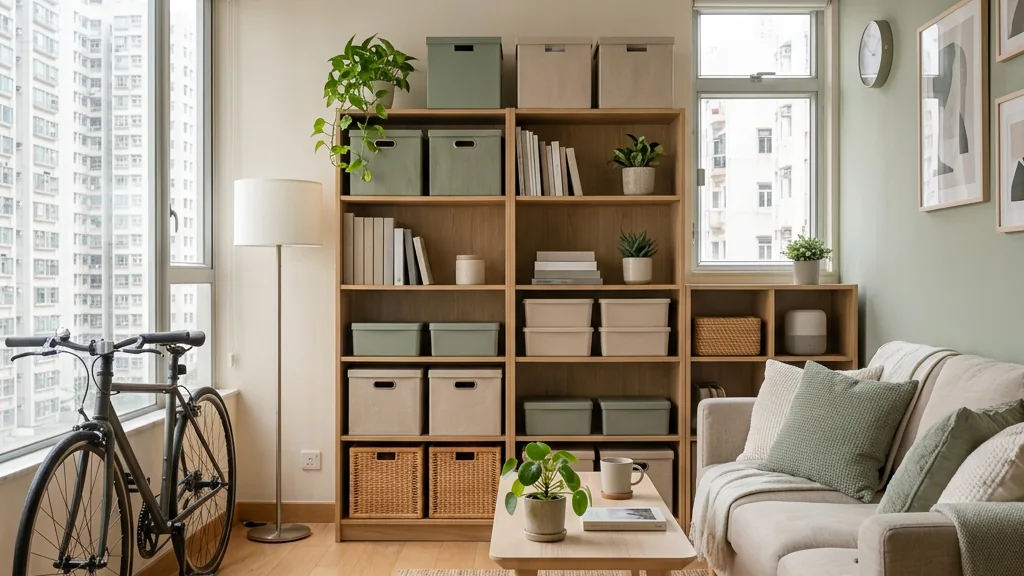
To manage terrace clutter, first sort items by frequency of use. Move infrequently used yet valuable items to self-storage to reclaim living space, ensuring better ventilation and a organized environment during renovations or seasonal cleaning transitions.
In Hong Kong, many residential spaces are limited, and terraces easily become temporary storage locations. Cleaning supplies, toolboxes, folding chairs, flower pots, suitcases, festive items, and infrequently used clutter become more and more numerous over time. The terrace was originally intended for ventilation, drying clothes, or relaxing, but when clutter is stacked for a long time, the space becomes crowded, and cleaning difficulty may also increase. If you don't want to discard some items for the time being, you can consider sorting and classifying them, and then arrange for self-storage as a transitional storage.
Sort terrace clutter first
Before sorting out the terrace, you can divide items into several categories, such as frequently used items, infrequently used items, seasonal items, disposable items, and items to be kept. Frequently used items can stay at home, while infrequently used but still valuable items can be considered for self-storage. Sorting in this way will be more targeted and avoid moving all items back to the interior at once. If there is no classification at the beginning, terrace clutter can easily just move from one corner to another, and may not actually free up space.
Infrequently used items are suitable for temporary storage
Many items common to terraces are not needed every day. For example, suitcases, camping gear, festive decorations, old fans, spare storage boxes, outdoor chairs, tools, and large clutter. If these items are left on the terrace for a long time, they may occupy walkways and are more prone to dampness, dust, or sun exposure. If there is no suitable space for storage at home for the time being, self-storage can be a transitional option, allowing the terrace to return to a more fresh state.
Pay attention to storage in damp weather
Hong Kong's spring and summer weather can be humid, which may affect the condition of items left long-term on a terrace. If items are to be kept, ensure they are dry before storage. If items are damaged, seek advice from professional conservators for safe handling.
Packaging methods affect convenience of access
Before transferring terrace clutter to self-storage, the packaging method is also worth noting. Small items can be placed in storage boxes or cardboard boxes, and heavier tools and books should not be concentrated in the same box to avoid being too heavy when moving. Fragile items can be wrapped with bubble wrap, towels, or protective materials. The contents can be indicated on the outside of the box, such as "camping gear," "festive decorations," "tool accessories," or "spare home goods." Clear markings help differentiate when retrieving in the future and also reduce the time spent repeatedly opening boxes to look for things.
Terrace space can be re-planned
After infrequently used items are transferred, the terrace space can be re-planned. You can keep frequently used clothes-drying tools, cleaning supplies, or plants, and reduce the stacking of unrelated clutter. If the terrace was originally blocked by items for a long time, it will be easier to sweep the ground, clean drains, and check corners after sorting. The terrace space does not necessarily have to be full of items. Leaving appropriate activity space helps ventilation and also makes the home look neater.
Self-storage is suitable as a space buffer
The role of self-storage is not necessarily just for long-term storage; it can also be used as a space buffer when organizing your home. When it is uncertain whether to keep items, or when your home is preparing for renovation, moving, or a big cleanup, storing infrequently used items first will make it easier to free up space for other arrangements. If all terrace clutter is moved into the home immediately, it may make the living room, bedroom, or corridor more crowded. Self-storage allows the sorting process to be carried out in stages without having to make all decisions at once.
Safety walkways should not be blocked by clutter
Leaving clutter on the terrace for a long time, in addition to affecting tidiness, may also affect daily use. If items block terrace doors, drains, or clothes-drying positions, it will be inconvenient when encountering heavy rain, strong winds, or when cleaning is needed. If some items are placed too close to windows or railings, they may also be affected by wind and rain. When sorting, you can first clear away items that block the walkway, and then decide which need to stay on the terrace and which are suitable for transfer to self-storage.
Regularly check stored items
After items are put into self-storage, you can also regularly check whether they still need to be kept. Some items are only transitional, such as home goods during renovation, seasonal items, or clutter before and after moving; some may be found to be no longer needed after being left for a while. Regular checks can avoid storage space being occupied by long-term idle items and can also keep home storage in a clearer state.
Seek help from a professional team
If there is a large amount of terrace clutter, or items include large storage boxes, suitcases, outdoor furniture, tools, and heavier home goods, you can consider seeking help from a professional team. Professional teams generally arrange suitable methods according to the number of items, storage needs, moving routes, and storage space, to assist in handling packaging, moving, and warehousing processes. The transfer of terrace clutter to self-storage is not just about clearing away items, but also reallocating home space. Proper sorting and temporary storage help make the terrace practical again and make daily living space fresher.
One Plus One Storage Services
One Plus One Storage provides professional self-storage services, dedicated to offering flexible, convenient, and reasonably priced storage solutions to the public. We deeply understand the issue of land supply shortages in Hong Kong's urbanization process, as well as the increasing demand for home space caused by changing work patterns. Therefore, we founded One Plus One Storage to respond to these growing needs.
Our self-storage units cover a variety of sizes, whether customers need small storage space for personal items or large storage space to store company documents or furniture, we can provide suitable solutions. In addition, our pricing is fair and transparent, and we offer flexible rental terms, whether for long-term or short-term, allowing customers to choose flexibly based on their own needs.
Welcome to request a quote or inquiry: Click to WhatsApp us
- Address: Room 16-17, 9/F, Nan Fung Commercial Centre, 19 Lam Lok Street, Kowloon Bay
- Tel: 3188 1889
- WhatsApp: 6928 9628
- Email:enquiry@opostorage.com
Feel free to contact us at any time, let us provide you with professional self-storage services!
Practical storage and planning
- Sort items into frequent use, infrequent use, and disposable categories.
- Ensure durable items are properly packed and prepared for removal.
- Utilize self-storage for transitionary needs to declutter the terrace.
Frequently asked questions
How can I prevent moisture damage when storing items in a unit?
Ensure all items are completely dry before storage. Avoid sealing moisture inside containers and select storage facilities with adequate ventilation systems.
Further reading: US National Archives guidance on storing papers and photographs; Canadian Conservation Institute guidance by material