
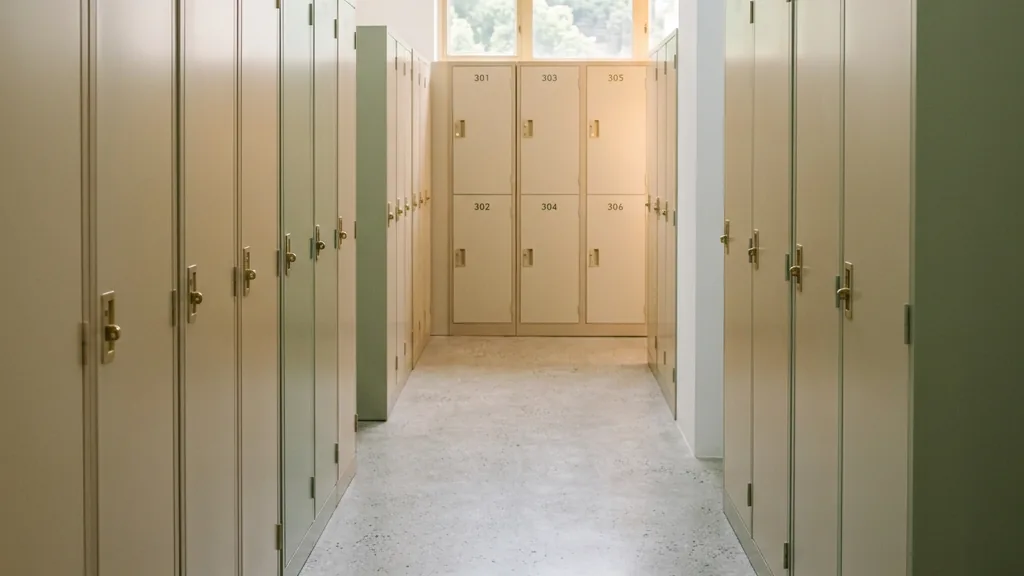
When choosing self-storage, prioritize facilities with access control and monitoring. Users should secure their own storage units, avoid storing sensitive or highly valuable items, and consult professionals for preservation advice.
With the increasing tension of urban living space, self-storage has become an ideal choice for many people to store items. However, when storing items in self-storage, safety is always one of the issues users are most concerned about. To ensure that your items get full protection, understanding the anti-theft measures of self-storage is crucial. This article will explore various effective anti-theft measures to help you protect the safety of items stored in self-storage.
1. Use of surveillance systems
Self-storage companies typically install surveillance systems to record site operations. Users may inquire about coverage and image handling policies to understand standard site procedures.
2. Advanced intrusion detection technology
Modern self-storage facilities often utilize auxiliary monitoring, such as motion alerts, to assist management in observing site activity and maintaining standards.
3. High-security access control system
Many self-storage facilities use electronic access control systems to restrict entry to authorized cardholders, helping manage site traffic.
4. Regular maintenance and inspection
Facility managers should regularly inspect security systems for functionality. Users are encouraged to visit their units periodically to monitor their items.
5. Considerations for item insurance
Storage involves inherent risks. For valuable items, consult with professional service providers regarding insurance options to evaluate suitable financial protections.
Seek help from a professional team
If concerned about site security or storing珍贵/valuable items, consult professional storage advisors or preservation experts for appropriate guidance.
When using self-storage to store items, understanding and adopting effective anti-theft measures is the key to ensuring the safety of items. Through surveillance systems, intrusion detection technology, high-security access control systems, regular maintenance, and item insurance, users can greatly reduce the risk of theft and protect their own property. If needed, seeking help from a professional team is also a good choice. Hope every user can safely store their items in self-storage and enjoy a safe and worry-free life.
One Plus One Storage Services
One Plus One Storage provides professional self-storage services, dedicated to offering flexible, convenient, and reasonably priced storage solutions to the public. We deeply understand the issue of land supply shortages in Hong Kong's urbanization process, as well as the increasing demand for home space caused by changing work patterns. Therefore, we founded One Plus One Storage to respond to these growing needs.
Our self-storage units cover a variety of sizes, whether customers need small storage space for personal items or large storage space to store company documents or furniture, we can provide suitable solutions. In addition, our pricing is fair and transparent, and we offer flexible rental terms, whether for long-term or short-term, allowing customers to choose flexibly based on their own needs.
Welcome to request a quote or inquiry: Click to WhatsApp us
- Address: Room 16-17, 9/F, Nan Fung Commercial Centre, 19 Lam Lok Street, Kowloon Bay
- Tel: 3188 1889
- WhatsApp: 6928 9628
- Email:enquiry@opostorage.com
Feel free to contact us at any time, let us provide you with professional self-storage services!
Practical storage and planning
- Verify that the storage facility has access control and active surveillance
- Use high-quality locks to improve unit security
- Purchase appropriate insurance for high-value items
Frequently asked questions
Does having a security system guarantee items are completely safe?
Security systems reduce risk but cannot guarantee zero incidents, so regular checks are recommended.
How should I manage valuable items for storage?
Consult professional preservation specialists to determine if long-term storage in public facilities is appropriate.
Further reading: US National Archives guidance on storing papers and photographs