
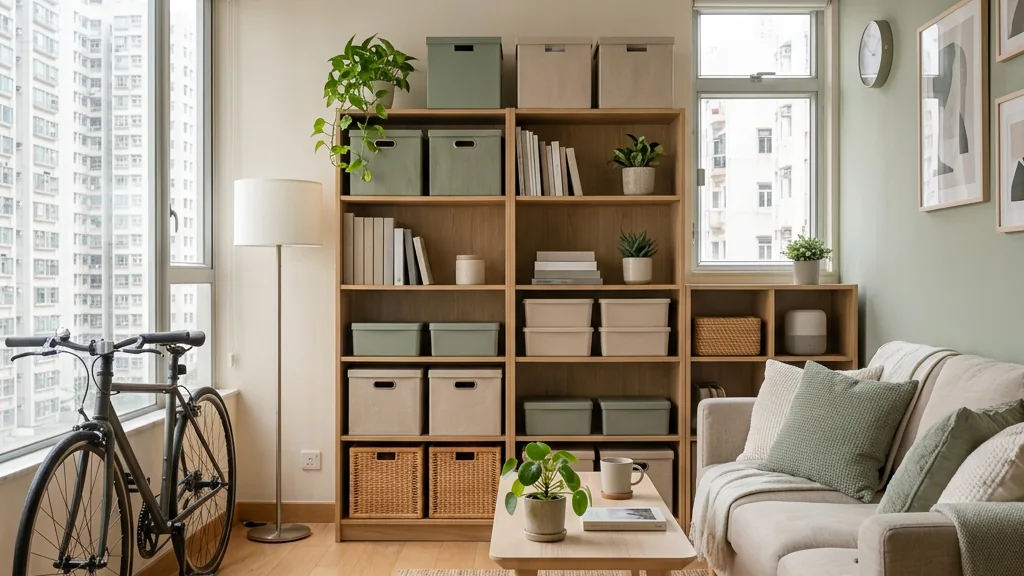
Sort items into "frequently used" and "temporarily unused" categories. Store the latter in storage units to free up home space. Ensure items are clean and properly labeled for easier retrieval.
Starting from June, many families will start preparing for summer vacation. Children's holidays, travel supplies, summer clothes, toys, books, and study materials may occupy home space in a short time. Hong Kong's living environment is limited. If all items are kept at home, living rooms, bedrooms, and storage cabinets can easily become crowded. Organizing items before summer vacation and then using storage boxes for diversion as needed may make home space more refreshing.
First, separate frequently used items from temporarily unused items
Before organizing summer vacation supplies, you can divide items into two categories: "about to be used" and "temporarily unused". For example, swimwear, travel supplies, sunscreen, and daily clothing can be kept at home for easy access; winter clothing, thick quilts, old textbooks, holiday decorations, and infrequently used sundries can be considered for temporary storage. After clear classification, it is easier to determine which items are suitable for being put into storage boxes and which items should be kept at home.
Children's items can be organized by category
During summer vacation, children spend more time at home, and toys, books, art materials, and sports equipment may become more commonly used. When organizing, you can first classify by category, such as toys, books, art tools, stationery, old school uniforms, and school term documents. Items that will still be used can be placed in easily accessible locations; items that are temporarily unused but still want to be kept can be put into storage boxes. This not only retains the items but also reduces the clutter in rooms and living rooms.
School term documents should not be piled up casually
Before summer vacation, many families will organize the homework, notes, textbooks, and notices for the whole term. These documents can easily pile up if they are all kept on the desk or cabinet surface. You can first separate important documents, certificates, works, and textbooks that need to be kept, and then put them into file bags or storage boxes. If they will not be used in the short term, you can label them by year or school term and then put them into storage boxes. It will be more convenient when you need to check them later.
Seasonal clothing can be diverted first
As summer begins, heavy winter clothing and bedding are used less frequently. If closet space is limited, consider placing cleaned items into suitable storage containers. Categorizing items helps with management. For clothing of significant value or with specific storage requirements, please consult professional preservation services.
Travel supplies can be organized centrally
Summer vacation is the time for many families to travel or have short local activities. Suitcases, travel bags, neck pillows, adapters, storage bags, and outdoor supplies, if not used frequently on weekdays, can be organized centrally. Travel supplies that will be used in the short term can be kept at home, while spare supplies that have no plans to be used can be temporarily put into storage boxes. This can reduce the space that suitcases occupy in bedrooms or storage cabinets for a long time.
Toys and interest items should be rotated regularly
Children's toys are becoming more and more numerous, which does not mean that all of them need to be kept at home at the same time. Some toys, board games, blocks, models, and craft materials can be rotated according to the frequency of use. Keep those that are frequently played with recently at home, and put those that are played with less often into storage boxes first. When you take them back after a while, children may feel refreshed, and it can also avoid living rooms and rooms being occupied by toys for a long time.
Storage boxes help to free up activity space
During summer vacation, children's activity time at home increases, and the home needs more space for them to read, play, or do crafts. If the floor and desk are piled with sundries, daily activities will be less convenient. Using storage boxes to temporarily store infrequently used items can restore more available space to the living room, bedroom, and desk positions. For small-unit families, this diversion method may help reduce the sense of home crowding.
Labeling helps to retrieve items later
Before putting items into storage boxes, it is recommended to indicate the contents outside the box, such as "retrieve after summer vacation", "children's old textbooks", "winter clothing", "travel spare supplies", "toy rotation". If there are multiple storage boxes at home, labels can avoid forgetting the location of items later. You can also simply record the content of each box, which will be more directional when you need to retrieve items later, without having to open and search box by box.
Pay attention to the state of items before putting them in the box
Not all items are suitable for long-term storage. Clothing and bedding should be clean and dry, while books and documents should be kept away from moisture. Ensure small appliances are organized with their accessories. For items with high historical value or existing damage, please consult professional restoration experts to avoid damage from improper DIY handling.
Seeking professional team for help
If there are too many items at home before summer vacation, or if you need to organize clothing, books, toys, travel supplies, seasonal home goods, and infrequently used sundries, you can consider seeking professional team assistance. Professional storage box teams generally arrange suitable storage boxes and collection/delivery methods according to the number of items, storage time, and space needs. Organizing before summer vacation may not just be cleaning up sundries, but also an opportunity to redistribute home space. Appropriately using storage boxes for temporary storage helps make home activity space more flexible.
One Plus One Storage Services
One Plus One Storage provides professional mini storage services, committed to offering flexible, convenient, and reasonably priced storage solutions to the public. We have a deep understanding of the problem of land supply shortages during Hong Kong's urbanization process, and the reality that changes in working patterns have led to an increasing need for home space among the public. Therefore, we founded One Plus One Storage to respond to these growing demands.
Our mini storage covers various sizes. Whether clients need small storage space to store personal items or large storage space to store company documents or furniture, we can provide suitable solutions. In addition, our pricing is fair and transparent, and we provide flexible lease terms. Whether it is long-term or short-term leasing, it allows clients to choose flexibly according to their own needs.
Welcome to request a quote or inquiry: Click to contact us via WhatsApp
- Address: Room 16-17, 9/F, Nan Fung Commercial Centre, 19 Lam Lok Street, Kowloon Bay
- Tel: 3188 1889
- WhatsApp: 6928 9628
- Email:enquiry@opostorage.com
Feel free to contact us anytime, and let us provide you with professional mini storage services!
Practical storage and planning
- Separate your household items based on how frequently you need them during the summer.
- Categorize and pack unused items into boxes with clear labels for future reference.
- Consult professional storage experts if you have large items or items requiring specific storage conditions.
Frequently asked questions
What types of items are suitable for temporary storage during summer?
Winter clothing, duvets, seasonal sports gear, textbooks from the past term, and infrequently used travel supplies are suitable for off-site storage.
Further reading: US National Archives guidance on storing papers and photographs