
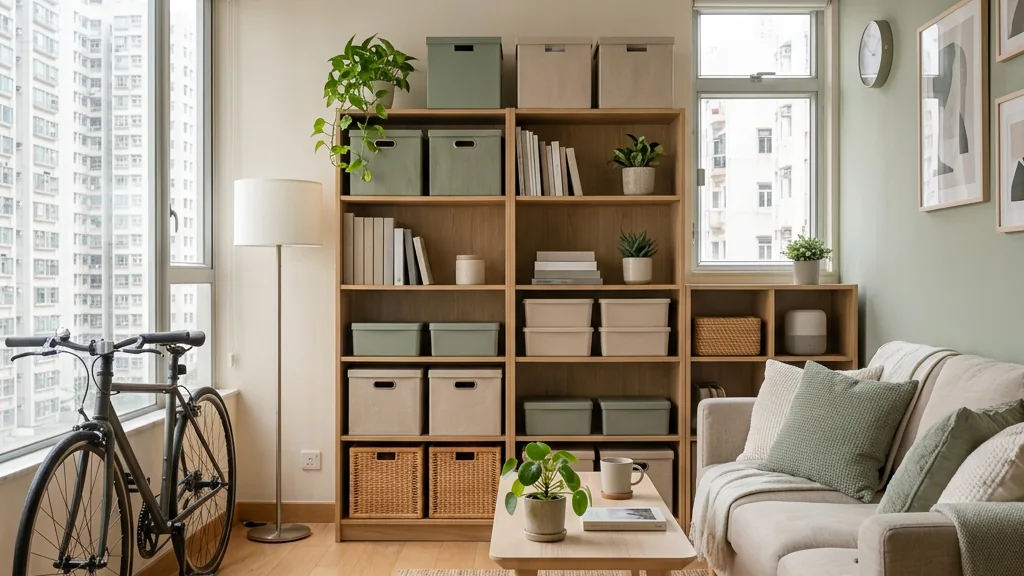
Home clutter is often caused by storage locations that ignore daily routines or designs that are too concealed for easy retrieval. Implementing logical categorization and maintaining flexible space, while considering external storage options, helps sustain long-term organization.
In daily life, many people have experienced such a cycle: every weekend, they spend a lot of time and energy on deep cleaning, neatly putting clothes and clutter into cabinets. However, within a few days, the home environment will quietly return to its original state, or even appear messier than before. This phenomenon of "getting messier the more you tidy" is often not because of a lack of determination to organize, but because we unconsciously fall into some visual and habitual space blind spots during the storage process. By re-examining daily living routes and storage logic, perhaps you can find the crux of the problem.
Blindly Pursuing Concealed Storage Neglects Retrieval Convenience
Many people, when tidying their homes, are used to stuffing all clutter within their sight into cabinets, drawers, or under-bed storage boxes, thinking that as long as the surface looks fresh, the job is done. However, when the storage design is too concealed, or when it requires going through layers of obstacles to get an item, it often reduces people's willingness to return the item to its place. Every time the entire closet is messed up while looking for a piece of clothing, or tools are casually left on the table after use, the meticulously created tidiness will collapse in a short time, forming a vicious cycle.
Neglecting Daily Life Routes Causes Items to Remain Casually
If the placement of items deviates from daily life trajectories, it is often the main reason for chaos. For example, if the storage point for frequently used keys, eco-friendly bags, or letter openers is set in the study far from the door, family members will naturally throw these items on the entrance shoe cabinet or living room tea table when they enter. When living routes do not match storage routes, items will pile up in the most convenient but least appropriate places, making the original smooth home space full of obstacles.
"Black Hole-Style" Storage Space Lacking Categorization Logic
Large cabinets or corner spaces often become dumping grounds for miscellaneous items without proper categorization. If items are unsorted, finding specific objects becomes difficult over time. If you consistently struggle to locate items, please re-evaluate your storage needs and consider proper disposal of items that are no longer needed.
Improper Use of Containers and Labels Causes Visual Fatigue
There are many storage containers available, but buying them without a plan may lead to overcrowding. Opaque boxes without clear labels make retrieval difficult and increase the burden of organizing. For fragile or valuable items, it is recommended to seek advice from professional conservators.
No Flexible Flow Capacity Reserved for New Items
Home space is a dynamic system. With daily consumption, gifts from friends, or the replacement of materials during the change of seasons, the total amount of items in the home is constantly changing. If you stuff every cabinet and every shelf rack without leaving a gap when planning storage, then as long as there is a new item in the home, it can only be placed on the table because there is no dedicated place for it. Space structures lacking flexible buffering often cannot withstand the small changes of daily life and are also a potential factor in the difficulty of maintaining a fresh home for a long time.
Seeking Professional Team Help
When facing the increasingly saturated storage space in the home, and no matter how you adjust your tidying habits, it is difficult to improve the status quo, moderately introducing external space support may be a compromise plan that can fundamentally relieve pressure. We provide professional storage planning and space consultation services, equipped with perfect environmental monitoring and flexible space configuration, which can provide a safe and independent temporary storage place for your seasonal materials and precious collections that are rarely used in daily life. You are welcome to contact our team at any time, and let us help you break through the bottleneck of home tidying and explore a more relaxed and smooth urban life pace together.
One Plus One Storage Services
One Plus One Storage provides professional mini storage services, committed to offering citizens flexible, convenient, and reasonably priced storage solutions. We have an in-depth understanding of the land supply shortage during Hong Kong's urbanization process, as well as the current situation where changing work patterns have led to an increasing demand for home space by citizens. Therefore, we established One Plus One Storage to respond to these growing needs.
Our mini storage covers various sizes. Whether clients need small storage space to store personal items or large storage space to store company documents or furniture, we can provide suitable solutions. In addition, our pricing is fair and transparent, and we offer flexible lease terms, allowing clients to flexibly choose according to their own needs regardless of long or short-term rentals.
Welcome to request a quote or inquire: Click here to contact us via WhatsApp
- Address: Room 16-17, 9/F, Nan Fung Commercial Centre, 19 Lam Lok Street, Kowloon Bay
- Phone: 3188 1889
- WhatsApp: 6928 9628
- Email:enquiry@opostorage.com
Feel free to contact us at any time, and let us provide you with professional mini storage services!
Practical storage and planning
- Assess whether item placement aligns with your natural daily movement patterns.
- Establish a clear categorization logic for different types of household items.
- Reserve flexible buffer space to accommodate dynamic changes in household belongings.
Frequently asked questions
How do I decide if I need external storage when home space is full?
If you struggle to manage storage space despite adjusting your daily habits, consider moving seasonal or infrequently used items to an external storage facility.
How can I avoid visual clutter from buying too many storage containers?
Plan your storage logic before purchasing. Using uniform containers with clear labels can improve both accessibility and visual consistency.
Further reading: US National Archives guidance on storing papers and photographs