
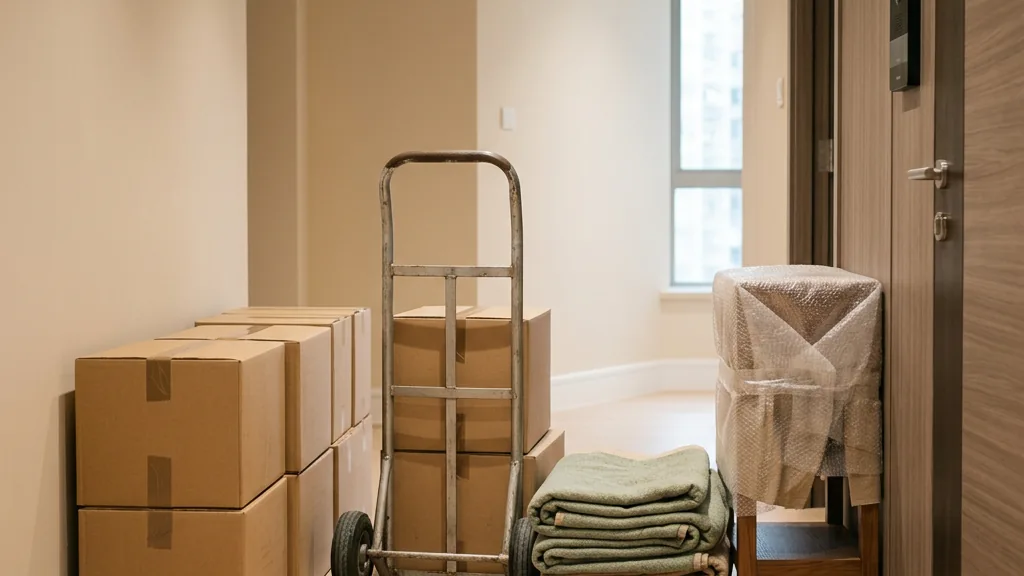
Assess the volume of your furniture before storage. Consult professional storage services regarding protection measures. For valuable pieces, seek advice from conservation experts for proper handling.
A full home renovation is an exciting upgrade, but the biggest challenge before construction often is: "Where do the large household furniture go?" For space-starved Hong Kong, renting a "short-term mini storage" is the only way to house your belongings.
How big of a unit do you need? How should you manage the budget? This article will teach you how to precisely calculate space and costs, helping you achieve a "cost-effective and high-quality" storage plan.
I. Space Calculation: Exactly how big a storage unit do you need?
Many homeowners fail to estimate correctly, renting units that are too large, wasting rent, or too small, leading to "storage overload." In fact, there is a golden rule for storage space calculation: the "stacking ratio".
Storage Reference: Disassembling furniture is recommended for storage; required area depends on total volume and stacking arrangement to ensure items remain protected.
300-400 sq. ft. (1-2 person unit): Approx. 20-30 sq. ft. mini storage. Suitable for storing disassembled bed frames, clothing boxes, and a small number of appliances.
500-700 sq. ft. (3-4 person family): Approx. 40-60 sq. ft. medium-sized storage. Can accommodate sofas, dining tables, refrigerators, and large amounts of miscellaneous items.
Utilize height: It is recommended to choose a warehouse with a high ceiling (above 8 feet) to make use of vertical space for "upward development," which can save about 30% on floor rent.
II. Budget Planning: Hidden costs beyond rent
When setting a budget, you cannot just look at the monthly rent; you must consider the entire "logistics chain."
Budget Planning: Renovations typically take months, so plan your budget in advance and verify current pricing and terms directly with the storage facility.
Moving Fees: This is the biggest variable. In addition to truck fees, you must calculate labor costs. If you live in a walk-up building or need to push goods over a long distance, the moving fee can easily be more expensive than the warehouse rent.
Packaging Materials: Storage for renovation is different from storing miscellaneous items; furniture needs collision protection. You need to reserve a budget for purchasing bubble wrap and industrial stretch film.
III. Traditional Mini Storage vs. Door-to-Door Storage: What should renovation customers choose?
For "dead items" during renovation (things that will not be used for these few months), door-to-door storage services are often more cost-effective than traditional warehouses.
Traditional Mini Storage:
Pros and Cons: 24/7 self-access, but requires arranging your own transport, and some warehouse doors are narrow, making it difficult for large furniture to enter.
Door-to-door storage (storage boxes/large item storage):
Pros and Cons: Full-service, with staff coming to your door to pick up and store items. Although access is less convenient, the rent is usually 30% lower than urban warehouses.
Conclusion: Renovation customers should prioritize door-to-door storage, because you simply do not need that dining table during the renovation; saving money and effort is the top priority.
IV. Environment and Safety: Do not ignore details just to save money
Wooden furniture is most afraid of dampness. When choosing a warehouse, you must ensure it has the following conditions:
Environmental Conditions: Wooden furniture should be kept in stable environments. Consult conservation experts for guidance on storing sensitive or antique pieces.
Fire safety compliance: Ensures the warehouse meets the latest fire safety regulations, and has fire and water damage insurance.
Pest control measures: Regular pest control to avoid cockroaches "moving into the new home" with the furniture.
Renovation storage is the most easily overlooked part of the project. Accurately calculating the required space and utilizing the price advantage of "door-to-door storage" can not only save thousands of dollars, but also ensure your beloved furniture is properly protected during the renovation and can be moved into the new home in perfect condition.
The self-access Hap Hing branch has ceased operations. For current services, please refer to Services and Fees.
One Plus One Storage Services
One Plus One Storage provides professional mini storage services, dedicated to offering citizens flexible, convenient, and reasonably priced storage solutions. We have a deep understanding of the problem of land supply shortages in Hong Kong's urbanization process, and the current situation where changes in working patterns have led to an increasing demand for home space among citizens. Therefore, we founded One Plus One Storage to respond to these growing needs.
Our mini storage units cover a variety of sizes; whether customers need small storage space for personal items, or large storage space for storing company documents or furniture, we can provide suitable solutions. In addition, our pricing is fair and transparent, and we offer flexible lease terms; whether for long-term or short-term, customers can choose flexibly according to their own needs.
Welcome to request a quote or inquire: Click here to contact us on WhatsApp
- Address: Room 16-17, 9/F, Nan Fung Commercial Centre, 19 Lam Lok Street, Kowloon Bay
- Tel: 3188 1889
- WhatsApp: 6928 9628
- Email:enquiry@opostorage.com
Feel free to contact us anytime, let us provide you with professional mini storage services!
Practical storage and planning
- Inventory and disassemble large furniture items as needed.
- Estimate storage area requirements based on furniture volume and layout.
- Consult storage providers regarding material protection and environmental safety standards.
Frequently asked questions
How should I choose the right storage type for my furniture?
Evaluate based on material sensitivity. For complex or antique items, consult professional conservators to ensure the storage environment is appropriate.
What basic protection is needed for furniture in storage?
Use suitable protective materials to prevent physical damage. For high-value items, coordinate with professional movers or restoration specialists.
Further reading: US National Archives guidance on storing papers and photographs; Canadian Conservation Institute guidance by material