
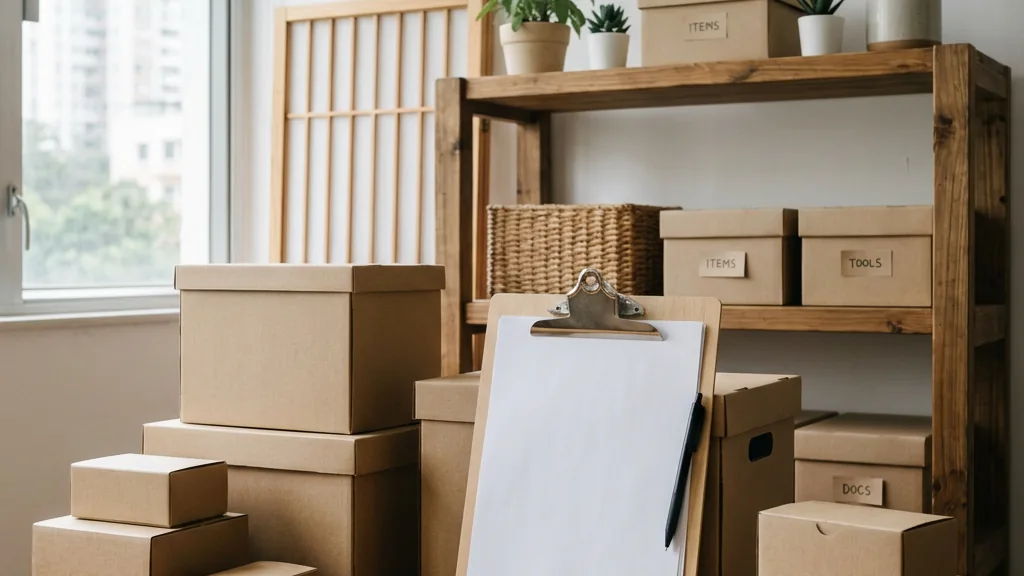
The split-storage method involves categorizing items by frequency of use, keeping high-frequency items at home or using pickup services, while storing low-frequency items in self-storage facilities to optimize space and costs.
Every time the seasonal change in Hong Kong arrives or the home needs a big cleaning, many people will sigh while looking at the narrow corridors at home and the cabinet tops filled with miscellaneous items. In order to solve the problem of insufficient space, many families or online store owners will hesitate to rent a large traditional mini-storage unit near their home, thinking: 'Rent a large unit at once, put all the winter clothes, seasonal quilts, infrequently used appliances, and miscellaneous items inside, and it will be done quickly!' Only to find out after renting for a few months that every time you want to find a down jacket placed in the depths of the unit or documents from a few months ago, you have to go a long way to the mini-storage, and you have to move a large pile of heavy objects in the narrow corridor.
This 'stuffing everything into the same large unit' approach is not only embarrassing every time you extract something, but you also have to pay expensive monthly rent for the large unit every month. How can this storage predicament be broken? Is the 'split-storage method' that has become popular in Hong Kong in recent years really a smarter choice than renting a single large unit?
Renting a large unit looks convenient, why does it become a double burden on your wallet and spirit in the end?
Many people have a blind spot when renting a unit, feeling that larger spaces are always better, and sign a large mini-storage unit at once. On the surface, this unit seems to swallow all miscellaneous items, but hidden costs follow. The process of extracting items from depths of a unit can involve moving heavy objects, which may become a physical burden. Paying high monthly rent for a large unit is a significant financial commitment, so users should carefully plan based on their actual space needs.
What is the split-style storage method? Why does managing high-frequency and low-frequency items separately best fit the pace of Hong Kong people's lives?
Faced with the various shortcomings of traditional large units, people in Hong Kong in recent years have begun to advocate a more flexible approach—'split-storage method'. The essence of this method is to 'precisely divert according to the frequency of item use', refusing to put everything in the same basket. High-frequency items refer to items that will be frequently contacted within a few months or even a few weeks, such as clothing of a specific season, bedding that needs to be changed frequently, or online store inventory that is frequently transferred; while low-frequency items are rare souvenirs, large suitcases, or Chinese New Year decorations that are used once every few years.
Through split-style storage, you can store low-frequency items for a long time in a large self-service mini-storage that is cost-effective and located slightly further away, while high-frequency items or items that need frequent access can be handled by door-to-door mini-storage boxes or exquisite storage at home. This type of diversion management model not only greatly reduces the time cost of extracting items each time but also flexibly allocates resources according to the actual life rhythm, making every dollar of rent spent worthwhile, truly fitting the fast-paced and space-limited living style of Hong Kong people.
How do self-service mini-storage and door-to-door mini-storage boxes combine perfectly? A practical breakdown of the golden configuration strategy for high and low-frequency items
If you want to truly implement the 'split-storage method' in daily life, concepts are not enough; you must master specific combination matching techniques. The smartest approach is to make good use of the mixed advantages of 'self-service mini-storage' and 'door-to-door mini-storage boxes'. For low-frequency items that are bulky and only moved once or twice a year (such as large camping gear, heavy winter quilts, coats from several seasons ago), it is best to rent a self-service mini-storage that is convenient for transportation and can be entered 24 hours a day for long-term placement; for high-frequency items that need to be updated frequently, have relatively unified volume, or you don't want to carry them yourself (such as seasonal clothes, various document files, frequently used books), you can hand them over to door-to-door mini-storage box services that specialize in 'no need to step out, pay by box'.
This dual-track parallel diversion strategy not only saves you the fatigue of moving heavy objects up and down the car yourself but also makes the turnover of high-frequency items unusually efficient, making your storage space like a smooth logistics supply chain, flexibly allocated anytime and anywhere.
What are the hidden traps of blindly pursuing low-priced large units? An analysis of the comparison between rental contracts, transportation costs, and actual utilization rates
In order to let all Hong Kong neighbors understand the difference between renting a large unit alone and split-style storage more intuitively, we have organized the core dimensions into the following practical comparison table:
Storage method and management dimension 🔍 | Rent a single large traditional mini-storage unit ⚠️ | Adopt split-style storage and mixed matching ✨ |
Space application and utilization rate 📦 | All high-frequency and low-frequency items are mixed and stacked, items in the depths are difficult to reach, and space is wasted seriously | Precise diversion according to frequency, high-frequency items are easy to take, low-frequency items are safely placed, and space utilization efficiency is extremely high |
Time and labor cost ⏱️ | Every extraction requires a personal trip and moving a large number of miscellaneous items, the process is time-consuming and laborious | Flexible combination of door-to-door service and nearby self-pickup, significantly saving time and physical exertion |
Long-term expenses and flexibility 💰 | Pay large area rent for a long time, contracts are rigid, difficult to flexibly reduce expenses according to seasons | Billing by diversion according to actual needs, long and short-term rentals are flexibly matched, and cost-effectiveness is more prominent |
When you face accumulated clutter, have tried organizing, or considered renting a large unit but worry about long-term costs, it is advisable to assess your specific storage needs. Our team has experience in local storage, providing self-storage and door-to-door options. If items require specialized care, please seek professional assistance. We provide split-storage strategies to help you manage space efficiency; for the most current service and pricing information, please contact our team directly.
When you are faced with more and more miscellaneous items at home, have tried organizing them yourself, or even considered renting a large unit, but are worried about excessive long-term expenses, and the need to travel far and move heavy loads sweating every time you look for things, rather than worrying about the limited living space every day, why not hand the storage problems over to our mini-storage team?
We have years of experience in local storage services in Hong Kong, are familiar with the real pain points of citizens in various districts regarding seasonal changes, moving, or daily storage, and provide diverse and flexible self-service mini-storage and door-to-door storage solutions. We insist on transparent pricing, dry environments, and are equipped with perfect 24-hour security and temperature and humidity control systems, and can tailor the most suitable split-style storage strategy for you without increasing your burden.
When you want to say goodbye to the clutter of miscellaneous items and let your home reappear spacious and comfortable, our professional support can make the whole process worry-free and effortless, helping you easily handle all storage problems.
FAQ
Q1: What are high-frequency items and low-frequency items? How should they be distinguished in general so that it doesn't get messy?
A: High-frequency items refer to items that will be frequently contacted, extracted, or used within the next three months, such as current-season clothing, commonly used documents, hot-selling inventory for online stores, etc.; low-frequency items are items used only once every six months to several years, such as Christmas decorations, old commemorative albums, large suitcases, etc. Managing the two separately can avoid digging through boxes and cabinets when taking items daily.
Q2: If the split-style storage method is adopted, will the rent become more expensive because two different warehouses need to be rented?
A: Just the opposite. Traditional large units often cause waste of 'air rent' because the space is too large. Through diversion, you can store low-frequency heavy items in remote warehouses with high cost-effectiveness and small area, while high-frequency light items can use door-to-door services billed by box or small spaces, and the overall calculation can more accurately control the budget and avoid paying for space that you don't use.
Q3: After separating the items, what should I do if I suddenly need to use something stored in the distant low-frequency warehouse?
A: When planning split-style storage, it is recommended to make clear electronic list labels on each box or area (can be recorded on the mobile phone). If you choose a mini-storage brand with flexible storage and retrieval services or their own fleet support, you can even arrange delivery through an appointment, easily transporting specific items to the designated location, taking into account both flexibility and convenience.
One Plus One Storage Services
One Plus One Storage provides professional mini-storage services, dedicated to providing citizens with flexible, convenient, and reasonably priced storage solutions. We deeply understand the issue of land supply shortages in Hong Kong's urbanization process, as well as the current situation where changing work patterns have led to an increasing demand from citizens for home space. Therefore, we created One Plus One Storage to respond to these growing demands.
Our mini-storage units come in various sizes; whether customers need small storage space for personal belongings, or large storage space to store company documents or furniture, we can provide suitable solutions. In addition, our pricing is fair and transparent, and we offer flexible rental terms, whether for long-term or short-term, allowing customers to choose flexibly based on their own needs.
Welcome to request a quote or inquiry: Click to contact us on WhatsApp
- Address: Room 16-17, 9/F, Nan Fung Commercial Centre, 19 Lam Lok Street, Kowloon Bay
- Phone: 3188 1889
- WhatsApp: 6928 9628
- Email:enquiry@opostorage.com
Welcome to contact us anytime, let us provide you with professional mini-storage
Practical storage and planning
- Inventory your belongings and categorize them into high and low frequency of use.
- Select storage solutions like pickup services for high-frequency items and warehouse units for low-frequency items.
- Maintain an inventory list of your items to easily track their designated storage locations.
Frequently asked questions
How should I handle organizing or repairing old or damaged items?
We recommend consulting professional conservators or repair specialists for precious or damaged items to avoid potential DIY damage.
Are the prices and service terms mentioned in the article currently applicable?
The pricing and terms in this text are historical information. Please contact the service provider directly for current offers and service availability.