
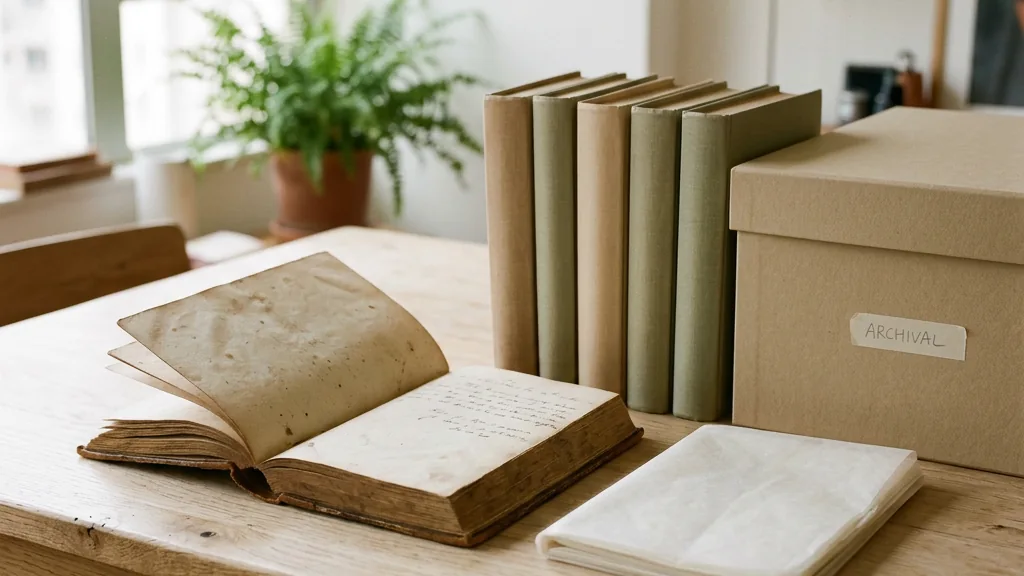
Regularly organizing your bookshelves and categorizing your collection helps optimize space. For precious books, ensure a stable environment and seek professional assistance for maintenance or if the collection exceeds your home capacity.
For people who love reading, books are not only carriers of knowledge but also sustenance for the soul and records of life's trajectory. However, as the amount of reading accumulates, the once tidy bookshelves gradually become crowded, with double stacking and horizontal piling, making each search for a favorite book a test. Faced with the ever-increasing collection of books, how to properly preserve these favorites in a limited home environment while maintaining a refreshing and comfortable reading space has become a daily subject that every book lover needs to face. Through some practical organizing and environmental planning techniques, you might find an ideal home for your precious collection.
Assessment and classification: Building a clear book list
The first step in organizing a bookshelf often requires a comprehensive review of all collections. We can try to move the books out of the shelves and roughly classify them according to frequency of use, emotional value, or book category. For example, distinguish tool books and books you are reading recently from classic collections that may only be browsed once a year. Building your own book list not only allows you to have a clearer understanding of your reading preferences but can also serve as a reference when purchasing new books in the future, avoiding duplicate purchases and better managing the capacity of the bookshelf from the source.
Optimizing display logic: Improving daily retrieval fluency
When putting books back on the bookshelf, reasonable display logic can significantly improve the visual effect and practicality of the space. We can try to place heavy and large hardcover books or art albums on the bottom layer of the bookshelf, which not only complies with the visual sense of stability but can also ensure the safety of the bookshelf structure. Books that are frequently consulted on a daily basis can be placed in the 'golden position' at eye level. For books that do not need to be retrieved frequently for the time being, you can choose to use the deep part of the bookshelf or the higher or lower corners to store them, so that the most prominent positions always maintain a dynamic sense of circulation.
Attention to environmental humidity and light: Avoiding paper deterioration
Book preservation depends on the surrounding environment. Given Hong Kong's humidity, store bookshelves in well-ventilated areas away from damp walls and direct sunlight to minimize the risk of paper deterioration.
Using dust-proof and insect-proof measures to keep books tidy
Books left for long periods accumulate dust; store precious items in suitable protective sleeves. Gently dust regularly, and consult a professional if you notice any damage.
Exploring diverse reading modes and flexible adjustment of habits
In the situation where physical book space is gradually saturated, moderately adjusting reading and consumption habits is also a way of thinking to maintain home balance. For example, for some leisure novels read once or magazines with strong timeliness, you can try to satisfy reading needs through e-books, audiobooks, or by making good use of public library resources. The purchase of physical books should focus on classic works that are worth reading repeatedly and have collection value. Through this dual-track reading mode, you can not only satisfy the desire for text but also keep the bookshelf at home in a healthy and comfortable bearing state.
Seeking help from a professional team
When the precious books at home have exceeded the load of the bookshelf, and every book carries memories that you cannot bear to part with, seeking external space support might be a two-pronged solution that can take into account both the passion for collection and the quality of living. We provide professional space planning and storage consulting services, equipped with all-weather temperature and humidity management and perfect protective facilities, which can provide a safe and tidy extension space for your beloved book collection, allowing you to enjoy a broad reading world while still having a spacious and comfortable home environment. Welcome to contact our team at any time to find the most appropriate arrangements for your collection.
One Plus One Storage Services
One Plus One Storage has historically provided self-storage solutions to address space constraints. Please inquire directly for current service terms, pricing, and availability.
Our self-storage units cover a variety of sizes; whether customers need small storage space to store personal items or large storage space to store company documents or furniture, we can provide suitable solutions. Furthermore, our pricing is fair and transparent, and we offer flexible lease terms; whether for long or short-term leases, customers can flexibly choose according to their own needs.
Welcome to request a quote or make an inquiry: Click here to contact us via WhatsApp
- Address: Room 16-17, 9/F, Nan Fung Commercial Centre, 19 Lam Lok Street, Kowloon Bay
- Telephone: 3188 1889
- WhatsApp: 6928 9628
- Email:enquiry@opostorage.com
Feel free to contact us at any time, and let us provide you with professional self-storage services!
Practical storage and planning
- Sort your books by frequency of use after removing them from the shelves.
- Arrange books by weight to maintain structural safety and accessibility.
- Ask an appropriate conservator about packaging valuable or damaged books. Support books securely according to their size without compressing the spine.
Frequently asked questions
When should I consider external storage for my book collection?
Consider external storage if your home bookshelf is overloaded, living space is compromised, or you cannot provide a stable environment for rare editions.
What should I do if my books are damaged or show signs of mold?
Avoid DIY repairs to prevent further damage; consult a professional book conservator for appropriate advice on handling the materials.
Further reading: US National Archives guidance on storing papers and photographs; Canadian Conservation Institute guidance by material