
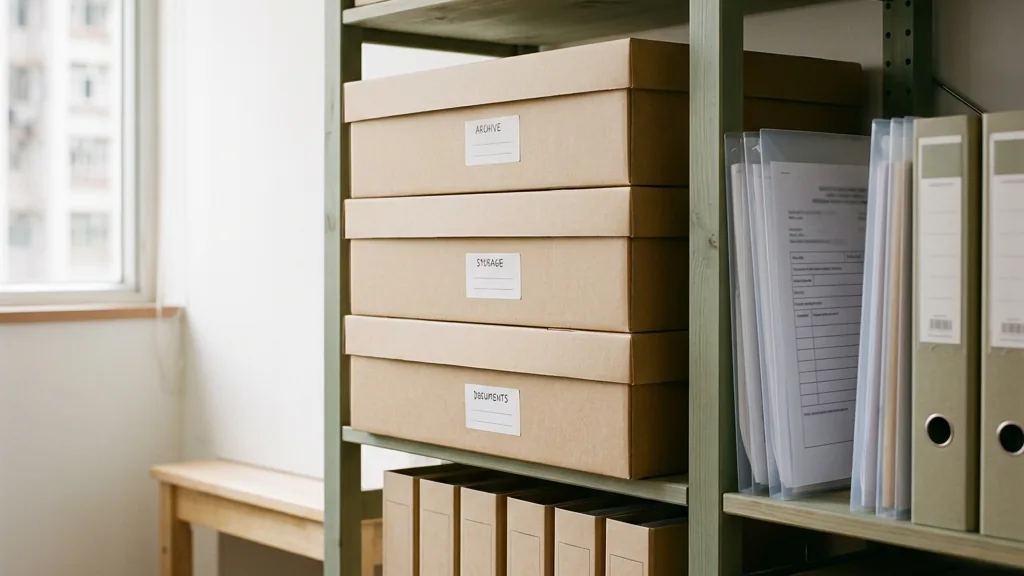
Commercial document storage utilizes multi-layered access control, anonymous coding systems, and secure transport to minimize data risk. Professional facilities also provide certified destruction services to ensure corporate compliance throughout the document lifecycle.
In Hong Kong's premium commercial real estate environment, office rents are exorbitant. Using such space to store thousands of accounting ledgers, HR files, or legal documents is undoubtedly a massive waste of resources. Many companies turn to commercial mini-storage or document storage services, yet concerns over data leakage risks persist.
How do these third-party storage spaces use technology and management systems to build a more rigorous security net than one's own office? This article dissects the security mechanisms of commercial document storage.
I. Rigorous Physical Security and Environmental Control
The primary difference between professional document storage and general self-storage lies in their highly enclosed security design.
Compliant document storage facilities typically implement surveillance and access control protocols intended to manage entry, with actual security effectiveness depending on specific facility equipment and operational procedures.
Professional warehouses often utilize fire protection and environmental management systems to maintain storage conditions. For valuable items, consulting professional conservators is recommended for appropriate storage guidance.
II. Unique Coding and Anonymous Management
To prevent industrial espionage or theft by internal staff, document storage facilities adopt an information isolation strategy.
Barcode Tracking System Every document box is labeled with a unique barcode before entering the warehouse. In the facility's computer system, staff can only see the box number and location, with no way to know what specific documents are stored inside. This anonymous management style ensures that even warehouse staff cannot know which box contains a major corporation's confidential contracts.
Point-to-Point Sealed Transport After businesses pack their documents, they use dedicated security seals to lock the boxes. These seals leave obvious marks if tampered with. During transport and storage, no one may open the box without client authorization, ensuring documents are not accessed by others from the moment they leave the office until they reach the warehouse.
III. Thorough Destruction Mechanisms
The end of a document's lifecycle is often when leakage risks are highest.
Confidential Destruction Service When documents exceed their statutory retention period, professional document storage provides one-stop destruction services. They use industrial shredders to instantly reduce entire boxes of documents into unrecoverable strips, which are then pulped for recycling.
Certificate of Destruction The entire destruction process is typically video-monitored. Upon completion, the storage company issues a legally binding certificate of destruction, verifying that the confidential documents were thoroughly destroyed at a specific time, providing evidence for corporate compliance audits.
Why Seek Professional Team Assistance?
Handling large volumes of commercial confidential documents involves extreme legal responsibilities and risks.
The greatest difference between a professional document storage team and general movers lies in their professional ethics and procedural standards. Staff at these companies usually undergo background checks before hiring and sign strict non-disclosure agreements. They use dedicated, sealed fleets for transport, never mixing goods with other shipments, ensuring no items are lost in transit.
Furthermore, professional teams are familiar with compliance requirements across various industries (such as banking, healthcare, and law) and can assist enterprises in establishing comprehensive document management systems—a level of professionalism hard to achieve by office administrative staff alone.
Storing documents in professional commercial mini-storage is not just about saving rent; it is a risk management strategy. Through military-grade security facilities and rigorous management processes, third-party document storage often better protects trade secrets than busy offices. Choosing the right partner allows enterprises to operate light and burden-free.
One Plus One Storage Services
One Plus One Storage provides professional mini-storage services, committed to offering flexible, convenient, and reasonably priced storage solutions to the public. We deeply understand the land supply shortages during Hong Kong's urbanization and the changing work patterns that increase the demand for home space. Therefore, we founded One Plus One Storage to respond to these growing needs.
Our mini-storage facilities cover various sizes; whether clients need small storage space for personal items or large space to store company documents or furniture, we can provide suitable solutions. Furthermore, our pricing is fair and transparent, and we offer flexible lease terms, allowing clients to choose flexibly according to their needs, whether for long or short-term leases.
Welcome to request a quote or inquiry: Click to contact us on WhatsApp
- Address: Room 16-17, 9/F, Nan Fung Commercial Centre, 19 Lam Lok Street, Kowloon Bay
- Tel: 3188 1889
- WhatsApp: 6928 9628
- Email:enquiry@opostorage.com
Feel free to contact us anytime, let us provide you with professional mini-storage services!
Practical storage and planning
- Organize documents into sturdy containers equipped with security seals.
- Assign box numbers while maintaining an anonymous index for content tracking.
- Hire professional, sealed logistics services for transfer to controlled storage environments.
Frequently asked questions
How should I handle historical or highly valuable documents?
It is recommended to consult professional archivists or conservators to determine appropriate storage materials and environmental conditions instead of relying on standard commercial storage.
What should I do if my documents appear damaged?
If you observe spots or unusual odors, refrain from handling them and contact a professional restoration expert for assessment; do not attempt DIY cleaning.
Further reading: US National Archives guidance on storing papers and photographs