
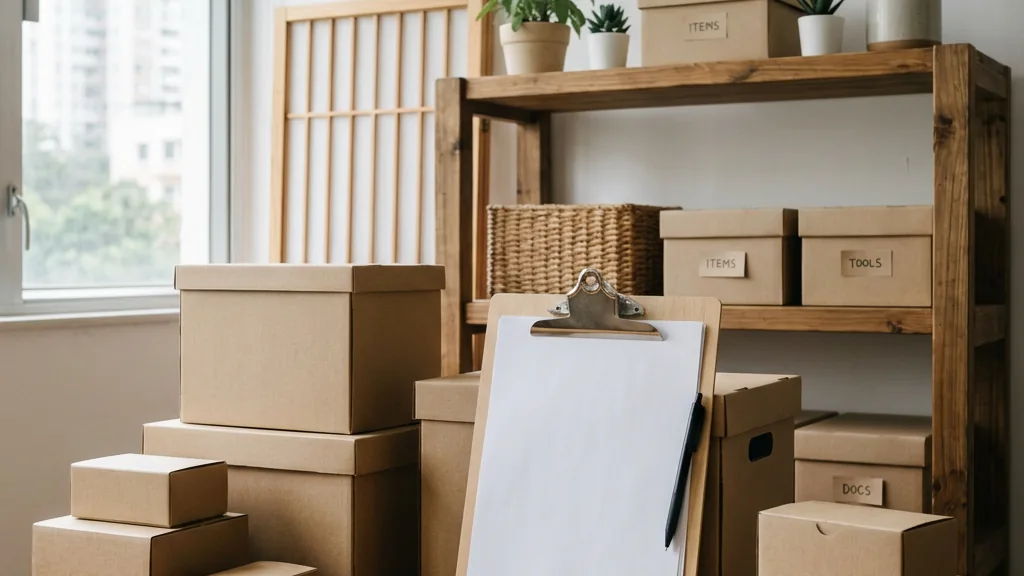
When assessing storage size, do not rely solely on the floor area. It is crucial to reserve space for movement and consider geometric gaps between items to ensure stacking safety. Systematic measurement and simulation will help you determine the accurate size needed, preventing inefficient space choices.
In space-constrained Hong Kong, many citizens often consider renting a mini-storage when facing increasingly crowded clutter at home. However, when really starting to pack, many people often fall into the myth of "exactly how many square feet do I need to rent". Blindly estimating based on intuition often easily leads to either renting a space that is too large, causing a waste of money, or renting one that is too small, making it unable to hold everything and necessitating an embarrassing change of storage unit. Although it is easy to encounter space blind spots and evaluation difficulties when calculating storage size, as long as you master a few dimensions to evaluate objectively and adopt scientific prevention and measurement measures, you can properly solve the problem of size selection and find the most suitable place for daily supplies.
The waste trap of geometric shapes of items and physical limits of stacking
When calculating mini-storage needs, it is common to intuitively sum up the floor area of boxes, but this often ignores reality. Irregular items naturally leave geometric gaps once stored. Additionally, there are safety limits for stacking heights. If these invisible spaces and safety height restrictions are not considered, the storage unit may fill up faster than expected.
The compression of actual usable volume by aisle movement and access costs
Another common blind spot is failing to account for aisle space. For convenient access, it is usually necessary to reserve room for movement. Without this, retrieving items at the bottom requires moving other boxes, increasing the risk of collision and damage. Always reserve a portion of the space for internal turnover to ensure smooth future use.
Key points of self-screening for asset inventory and volume measurement before renting
Before contacting a mini-storage company, conducting a systematic self-screening and volume measurement is a key step to avoid choosing the wrong size. Users might as well prepare a measuring tape and a notebook, and classify and filter all items prepared for placement outside the home. First, arrange cartons of the same type and size neatly, measure their length, width, and height, and calculate the preliminary volume; second, specifically mark those high-unit-price items that are bulky but cannot be dismantled (such as snowboards, large suitcases, or instrument hard cases), and simulate their placement posture in the warehouse. Through this kind of dynamic self-screening and field simulation, users can clearly grasp the three-dimensional space actually occupied by various types of supplies, so as to more accurately correspond to the suitable mini-storage size and avoid blind following.
Benefit and Risk Balance Assessment
When deciding on the size of the mini-storage, blindly choosing a space that is too small will inevitably bring the embarrassment of being unable to accommodate everything in the future, but if you blindly rent a warehouse that is too large in pursuit of extreme spaciousness, it will cause long-term unnecessary economic expenditure waste. Before moving to rent a warehouse, it is suggested to objectively weigh the long-term rent cost, the dynamic changes in the increase or decrease of supplies in the future, and the actual demand for space convenience. Through precise volume calculation and reserving appropriate turnover margin, it is often possible to achieve an ideal balance between saving expenses and ensuring storage smoothness, making every penny worth it.
Seeking Professional Team Assistance
If you are unsure of the size needed or lack experience in space planning, seeking assistance from professional storage consultants can minimize trial and error. Professional teams provide layout suggestions, reducing the risk of renting the wrong size or improper placement, ensuring a safer and more precise storage experience.
One Plus One Storage Services
One Plus One Storage provides professional mini-storage services, dedicated to offering citizens flexible, convenient, and reasonably priced storage solutions. We deeply understand the issue of land supply shortages in Hong Kong's urbanization process, as well as the status quo where changing work patterns have led to an increasing need for home space among citizens. Therefore, we founded One Plus One Storage to respond to these growing needs.
Our mini-storage units come in various sizes; whether customers need small storage spaces to store personal items or large storage spaces to store company documents or furniture, we can provide suitable solutions. In addition, our pricing is fair and transparent, and we offer flexible lease terms, allowing customers to choose flexibly based on their needs, whether for long or short-term leases.
Welcome to request a quote or inquiry: Click to WhatsApp contact us
- Address: Room 16-17, 9/F, Nan Fung Commercial Centre, 19 Lam Lok Street, Kowloon Bay
- Tel: 3188 1889
- WhatsApp: 6928 9628
- Email:enquiry@opostorage.com
Please feel free to contact us anytime, let us provide you with professional mini-storage services!
Practical storage and planning
- Organize and measure your items by length, width, and height to estimate total volume.
- Identify large, non-dismountable items and simulate their footprint within a storage space.
- Reserve a sufficient margin of space within the unit to allow for easy access and rotation.
Frequently asked questions
What should I do if my storage unit is running out of space?
Review your inventory to see if any items can be removed or reorganized. If space is still insufficient, consult with your storage provider about upgrading to a more suitable unit size.
Any advice for storing valuable items?
Please consult with professional preservationists for specific storage advice to ensure that the method used does not cause any unintended damage or strain to your items.
Further reading: US National Archives guidance on storing papers and photographs