
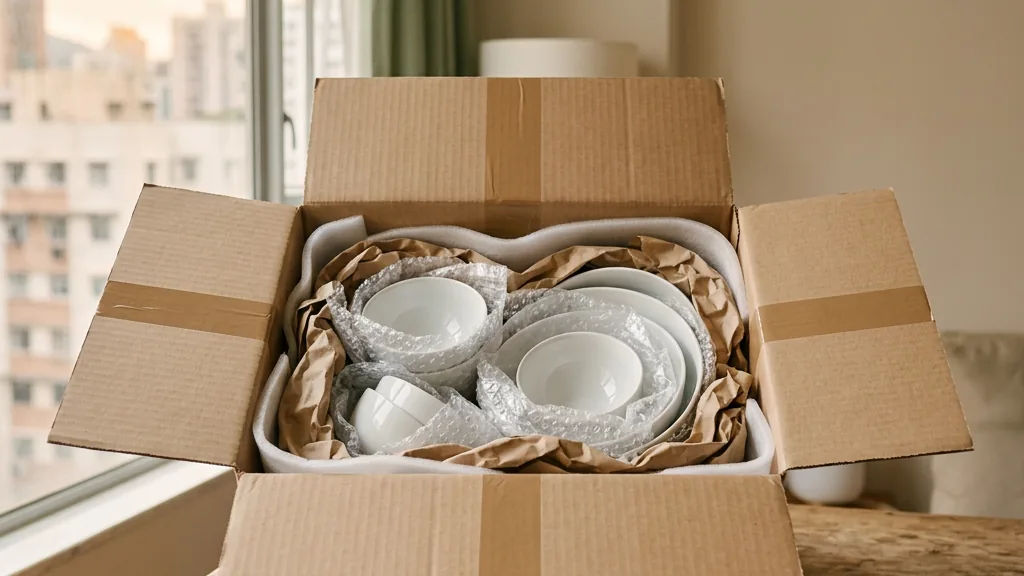
Optimize your home by decluttering in small zones and utilizing external storage for off-season items. Consult professionals for valuable or delicate belongings to ensure proper care.
Every time the season changes in Hong Kong, many people start to get a headache when looking at their home of just a few hundred square feet. From heavy winter clothes and quilts to summer short-sleeved shirts and various sundries, the whole house seems to suddenly shrink. Many people try to move all their boxes out in one go, only to end up physically exhausted midway, with the living room piled high with clutter and no room to walk, turning seasonal house tidying into a mentally and physically draining endurance test. Faced with piles of clothing and limited storage space, how can you say goodbye to procrastination and anxiety and easily complete painless decluttering?
Piled high, what to do? Why seasonal house tidying always turns into a nightmare
In Hong Kong, where property prices are high, living space for the average family is limited, and wardrobes and storage cabinets are already packed full on normal days. Whenever spring turns to summer or autumn to winter, putting away the previous season's items and taking out the new season's clothes often requires a large-scale "indoor reshuffle".
Many people feel resistant to seasonal tidying primarily due to a lack of clear planning. They often start with the mindset of "getting it all done" in a few hours, only to dump large batches of clothing boxes on the floor, and as physical exertion and chaos increase, anxiety wells up. They often end up giving up halfway, stuffing the clutter back into the cabinets, causing the problem to repeat. To break this vicious cycle, the key lies not in blind effort, but in mastering a scientific, phased logic for reducing items.
Torn between throwing away or keeping? Deciphering the psychological tug-of-war
During the process of seasonal house tidying, the biggest psychological hurdle often comes from an emotional tug-of-war. Seeing a jacket bought years ago or an item rarely used, thoughts like "maybe I'll wear it one day" or "it was quite expensive when I bought it" always surface, causing the already tight home space to remain occupied by redundant items.
To help everyone clarify their thinking, we have compiled a comparison table of common item states and corresponding solutions:
Item state and context | Common psychological blind spots | Smart and practical solutions |
Clothes not worn for over two seasons | Always feeling that "there will be a day to use it" | Unless it has special commemorative value, it is recommended to bravely donate or declutter |
Space-consuming heavy quilts and coats | Insufficient storage space at home, not knowing where to put them | Use vacuum compression bags for storage, or consider transferring to an external One Plus One Storage unit as a transition |
Old items with emotional memories | Reluctant to throw away past memories and connections | Keep a tiny selection after photographing and recording, and store the rest properly classified |
As can be seen from the table above, through rational classification and cooperation with external space, pressure caused by lack of space can be effectively alleviated.
Get it done in one go or step-by-step? The four-step guide to painless decluttering
Faced with the massive project of changing seasons, if you want to achieve "painless reduction of items", adopting a phased, progressive strategy is often more effective than doing it all at once. The following is a four-step guide:
Phase 1: Micro-zoning cleanup: Avoid emptying the entire wardrobe at once. Focus on one small area at a time (such as a single drawer or a single shelf of the wardrobe), spending 15 to 20 minutes each time, to reduce psychological burden.
Phase 2: Implement three-second intuitive screening: Use your first intuition when picking up an item. If you cannot remember the last time you wore it within three seconds, it usually means this item has an extremely low usage rate in your future life.
Phase 3: Use labels and moisture-proof classification: Wash the seasonal clothes you need to keep and keep them dry. Use transparent storage boxes with clear labels to facilitate finding them later.
Phase 4: Space transfer and external transition: For large seasonal items or quilts that are temporarily unused but you are reluctant to throw away, consider transferring them to a secure and dry external One Plus One Storage unit to free up valuable pathways at home.
Do it yourself or rent a storage unit? The boundary between DIY and external space
When seasonal items at home are piled up to the point where even the corridor is blocked, many people face another choice: should they continue to look for gaps to stuff things in at home, or seek the help of external space?
Here, we need to objectively define the scope of safe DIY and professional technical scope. For daily clothing classification, washing, folding, and sorting of small storage boxes, users can absolutely do it themselves; but if it involves a large number of large winter quilts, suitcases, seasonal furniture, or massive clutter, and the storage cabinets at home are already overloaded or even seriously affecting indoor movement, blindly piling them up at home will only create more pressure. At this point, making good use of modern external One Plus One Storage as a transitional space is often the best solution that balances quality of life and item retention.
Seeking professional team help
Faced with this seemingly endless endurance test of seasonal packing, if you find that your daily work is busy, home space is limited, or you feel overwhelmed by the piles of seasonal clothes, relying on yourself alone often leads to exhaustion. When you cannot spare the time to properly handle the classification and transition of large items, instead of worrying alone, it is better to leave professional matters to us. Our storage team has extensive local Hong Kong storage and logistics experience, providing a modern storage service with an excellent environment and high security, and can offer you one-stop storage and moving support for large items. When you want to release spacious room for your home again and enjoy a relaxed life of painless item reduction, our professional team is always ready to provide you with the most thoughtful support to help you easily handle all seasonal worries.
Frequently Asked Questions (FAQ)
Q1: When changing seasons, how exactly should I determine which clothes to keep and which to declutter?
Assess the frequency of use for your items. If an item has not been used for a significant period and lacks special value, consider donating or recycling it. Consult professionals for delicate items.
Q2: The space at home is really too small, is it not cost-effective to move large seasonal quilts and thick coats to a storage unit?
A: Modern storage units offer flexible storage sizes. Compared to moving to a larger and more expensive home just to accommodate a large amount of seasonal clutter, renting a small storage space to store seasonal items is actually more cost-effective.
Q3: When storing clothes for the season, are there any good methods to prevent moisture and mold?
Ensure items are clean and dry before storage, and use appropriate protective materials in a well-ventilated environment. Seek expert advice for high-value items.
One Plus One Storage Services
One Plus One Storage provides professional storage services, committed to providing citizens with flexible, convenient, and reasonably priced storage solutions. We deeply understand the problem of land supply shortages in Hong Kong's urbanization process, and the reality that changes in working patterns have led to an increasing demand for home space by citizens. Therefore, we created One Plus One Storage to respond to these growing needs.
Our storage units cover a variety of sizes; whether customers need a small storage space for personal items or a large storage space to store company documents or furniture, we can provide suitable solutions. In addition, our pricing is fair and transparent, and we provide flexible lease terms; whether for long-term or short-term, customers can flexibly choose according to their own needs.
Welcome to request a quote or inquire: Click to contact us on WhatsApp
- Address: Room 16-17, 9/F, Nan Fung Commercial Centre, 19 Lam Lok Street, Kowloon Bay
- Phone: 3188 1889
- WhatsApp: 6928 9628
- Email:enquiry@opostorage.com
Feel free to contact us anytime, let us provide you with professional storage
Practical storage and planning
- Divide your home into small, manageable zones to handle clutter effectively without exhaustion.
- Apply intuitive screening to identify items that are rarely used and no longer needed.
- Store seasonal items in appropriate protective materials and seek professional assistance for moving and storage.
Frequently asked questions
How should I determine what to keep or declutter?
Review the usage frequency of your items. For those not used in a long period without special significance, consider donating or recycling to save space.
What is recommended for storing large seasonal items?
Use appropriate protective packaging and stable environments. For high-value or delicate items, it is best to seek advice from professional preservationists.
Further reading: US National Archives guidance on storing papers and photographs; Canadian Conservation Institute guidance by material