
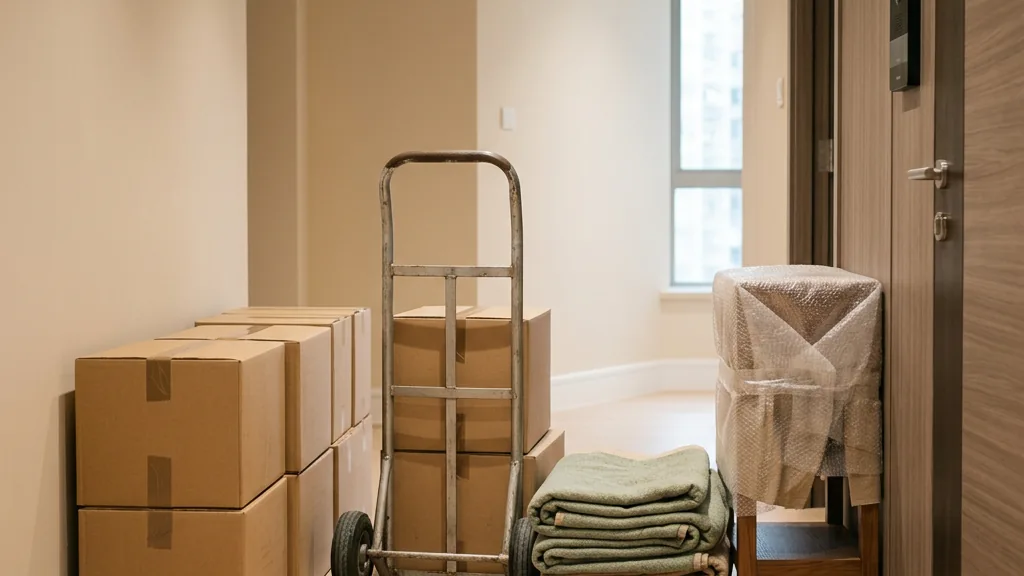
Unit transfers require planning for contract overlap periods to avoid delays. Before moving, perform a systematic inventory and pack items with appropriate materials. If you have fragile or valuable items, seek professional advice to ensure their safety and prevent damage.
In Hong Kong, when frequently relocating storage space or moving, successfully transferring items from an old self-storage unit to a new one is often a process that tests attention to detail and planning. Many people think of this as just a simple 'move,' but if you ignore the administrative contract timing gaps, item inventory verification, or protection during transport, it can easily lead to damaged items, losses, or even additional double rental expenses. Although cross-storage moves involve a certain level of complexity and risk, as long as you grasp several dimensions to objectively evaluate and take comprehensive preventive measures, you can make the entire handover process seamless and fluid.
Cost evaluation of overlapping handover periods and double rent
When scheduling your move, prioritize whether a buffer period between the old and new storage contracts is necessary. Coordinating the move-out and move-in on the same day poses significant administrative risks. If delays occur during the process, it may lead to additional charges or access issues, so evaluate your timeframe to allow for a flexible transition.
Environmental temperature and humidity fluctuations during transport and hazards to fragile items
During transit, items are exposed to outdoor environments, increasing potential risks. Use appropriate protective packaging for your belongings, ensuring boxes are well-cushioned. For valuable or sensitive items, if you are uncertain about the correct handling or storage methods, consult with professional preservationists or specialists to prevent accidental damage.
Self-check priorities for pre-move inventory and new unit layout
Before you start moving old unit items onto the truck, conducting a systematic self-check and total inventory is key to avoiding 'moving old trash to a new space' or missing important items. Users might want to check every box in the old unit one by one: first, verify the inventory of each box and take this opportunity to do some 'decluttering' by disposing of old items that are no longer needed to reduce transport volume; second, based on the actual square footage and dimensions of the new unit, plan the movement path and zoning for items after they enter the unit (for example, placing frequently used items on the outside where they are easiest to retrieve). Through such detailed dynamic checking, not only can you maintain excellent space efficiency in the new unit, but you can also avoid unnecessary volume waste.
Benefit and risk balance evaluation
Faced with the move between old and new units, blindly hiring an ordinary cargo van and doing everything yourself may seem like it saves service fees, but it often requires a lot of physical strength, time, and mental effort to deal with emergencies. When deciding how to move, it is recommended to objectively weigh your own physical strength, transport costs, total amount of items, and the risk of damage during the move. If there is a wide variety of items or the volume is huge, moderately seeking support from experienced logistics or moving teams can often achieve an ideal balance between controlling the budget and ensuring the safety of items.
Seeking help from a professional team
When facing a complex cross-storage move, uncertain how to arrange the timing gap between old and new units, and when personal time and physical strength are limited, seeking help from an external professional space planning and moving consultant might save you from a lot of repetitive hassle. This type of service often requires rich on-site coordination experience. A professional team can not only provide objective time and space assessments beforehand but also assist in planning an efficient transfer scheme, effectively reducing the risk of damage during the move. Through professional and attentive assistance, you can complete the handover between the old and new units safely and smoothly. Welcome to contact our professional team at any time to explore the most suitable urban storage and moving schemes together.
One Plus One Storage Services
One Plus One Storage provides professional self-storage services, dedicated to providing citizens with flexible, convenient, and reasonably priced storage solutions. We deeply understand the issue of land supply shortages in Hong Kong's urbanization process, as well as the status quo where changing work models have led to an increasing need for home space among citizens. Therefore, we founded One Plus One Storage to respond to these growing needs.
Our self-storage units cover a variety of sizes; whether customers need small storage space to store personal items or large storage space to store company documents or furniture, we can provide suitable solutions. Furthermore, our pricing is fair and transparent, and we offer flexible lease terms; whether for long or short-term leases, customers can flexibly choose according to their own needs.
Welcome to request a quote or make an inquiry: Click here to contact us via WhatsApp
- Address: Room 16-17, 9/F, Nan Fung Commercial Centre, 19 Lam Lok Street, Kowloon Bay
- Telephone: 3188 1889
- WhatsApp: 6928 9628
- Email:enquiry@opostorage.com
Feel free to contact us at any time, and let us provide you with professional self-storage services!
Practical storage and planning
- Arrange a buffer period between contract end and start dates to account for potential delays.
- Perform a thorough inventory and declutter items to simplify the transport process.
- Use sturdy packaging and consult specialists for the handling of delicate or valuable belongings.
Frequently asked questions
Why is same-day handover not recommended for storage units?
Same-day handover carries high operational risks; any transport or packing delay could lead to overstay fines or the inability to access the new unit on time.
Further reading: US National Archives guidance on storing papers and photographs; Canadian Conservation Institute guidance by material