
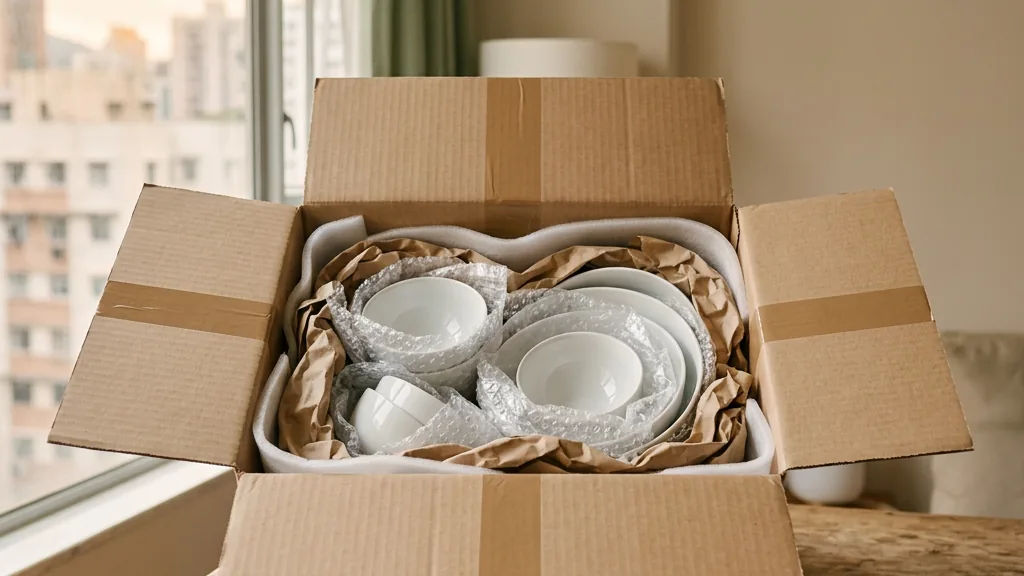
When using mini storage, prioritize airtight packaging, maintain a digital inventory, and stack heavy items at the bottom. For valuable or high-volume items, professional assistance is recommended to ensure safe handling and avoid damage.
In this city where land is worth its weight in gold, whether living in a 'small unit' with limited space or undergoing business transformation and relocation in an office, renting 'mini storage or external storage services' has already become regular procedure for many citizens and enterprises to free up living space. For novices trying to rent storage for the first time, the entire process seems very simple: buy a few cardboard boxes, stuff items in, call a vehicle to transport them to the warehouse.
However, after experiencing this for a few months or even half a year, when they go to retrieve items again, or when the contract expires and they need to move items back to their residence (return), they often encounter a series of 'hidden disasters' that make people want to cry—clothing moldy and furry, the bottom of the box burst, searching for a seasonal coat like finding a needle in a haystack, or even discovering items are damp and deformed when moving them home.
What are the most fatal hidden details that novices most easily ignore in the entire process from packing to final return? And how can these pitfalls be avoided? Here is a comprehensive in-depth breakdown for you.
Hidden Detail 1: The fatal cost of ignoring 'temperature, humidity, and damp/pest prevention' during packing
Hong Kong's climate has typical 'damp spring, hot summer' characteristics, especially during the return of the humid season each spring, where air humidity is consistently above 90%. When packing, many novices often just stuff seasonal clothing, quilts, leather goods, or paper books into ordinary cardboard boxes randomly.
Although mini storage facilities provide environmental management, poor ventilation or insufficient packaging seal may lead to condensation when temperature and humidity fluctuate. Over time, this may result in a musty smell or mold spots, so extra care is advised for valuable items.
Correct protective approach: All textiles, leather goods, and paper must ensure they are absolutely dry before packing; priority should be given to using thick vacuum storage bags or food-grade plastic airtight boxes, and placing sufficient desiccant beads and bamboo charcoal bags inside the box, avoiding direct bare packing in ordinary cardboard boxes.
Hidden Detail 2: Lack of '3D numbering and digitized inventory' leads to searching like finding a needle in a haystack
When packing, many novices, relying on their confidence that 'I remember what is in this box', stack thirty or more identical-looking cardboard boxes in mini storage.
Without a systematic inventory, locating specific items requires searching through numerous stacked boxes, which is physically demanding and may lead to disorganized aisles or accidental damage.
Correct protective approach: Implement a 'digitized storage inventory'. Attach clear numbered labels (e.g., A-01, A-02) to multiple sides of each box, and take panoramic photos of the items when each box is opened with your mobile phone, recording the list in your phone's memo or a dedicated App. Update it instantly every time you store or retrieve, achieving 'storing while away'.
Hidden Detail 3: Ignoring 'box weight limits and stacking crisis'
During moving and storage, to save space, boxes are usually stacked 3 to 4 layers high.
When stacking boxes to save space, if the bottom container is overloaded or structurally unstable, the immense vertical pressure may cause it to collapse or deform, potentially damaging the contents inside.
Correct protective approach: Follow the golden physics principle of 'heavy at the bottom, light at the top'. Heavy items (such as books, tools) must be packed in small cardboard boxes, and the weight of a single box should not exceed 15 kg; light and fluffy items (such as pillows, quilts) can be put in large boxes. When stacking, always put heavy boxes on the bottom layer.
Hidden Detail 4: Ignoring 'flow and secondary cleaning during return'
When the lease ends, or when you need to move items stored outside back to your residence (return), it is often the start of another breakdown.
Moving large amounts of stored items back into a small home requires careful planning to avoid congestion. Additionally, items may collect dust during storage; cleaning them before entry helps maintain a cleaner living environment.
Correct protective approach: Plan the indoor organization route in advance before returning items; prepare a wet towel at the entrance when moving back to the residence, wipe the exterior of each box to clean it before bringing them in batches, avoiding dragging storage items covered in dust directly onto clean wooden floors.
Seek professional team assistance
Although through careful packing planning, damp-proofing, and digital inventories, the risk for novices renting storage can be greatly reduced, handling the entire cumbersome process of whole-house packing, heavy box moving, cross-district transport, and final home return alone is often a huge drain of physical strength and time for busy urbanites in Hong Kong. A slight carelessness can easily lead to back injuries or damaged precious items. When you are faced with storage transfer, need to store large quantities of items safely, need damp-proofing, and need point-to-point transport return support, our professional mini storage team is ready to provide you with efficient and meticulous assistance. With our rich practical experience, standardized protective processes, and efficient logistics solutions, we strictly oversee every detail from packing to storage to return, dedicated to protecting your asset safety and quality of life, making your space management journey safe, smooth, and worry-free!
One Plus One Storage Services
One Plus One Storage provides professional mini storage services, dedicated to offering citizens flexible, convenient, and reasonably priced storage solutions. We have an in-depth understanding of the land supply shortage during Hong Kong's urbanization and the current trend where changes in work patterns have led to an increasing need for home space. Therefore, we founded One Plus One Storage to respond to these growing demands.
Our mini storage units come in a variety of sizes; whether customers need small storage space for personal items or large storage space for company files or furniture, we can provide suitable solutions. Furthermore, our pricing is fair and transparent, and we offer flexible lease terms, allowing customers to choose flexibly based on their own needs, whether for long-term or short-term rental.
Welcome to request a quote or make inquiries: Click to contact us via WhatsApp
- Address: Room 16-17, 9/F, Nan Fung Commercial Centre, 19 Lam Lok Street, Kowloon Bay
- Phone: 3188 1889
- WhatsApp: 6928 9628
- Email:enquiry@opostorage.com
Feel free to contact us anytime; let us provide you with professional mini storage.
Practical storage and planning
- Use airtight plastic containers or vacuum bags with suitable desiccants for better protection.
- Label all boxes clearly and create a digital inventory with photos for easy tracking.
- Follow the 'heavy on bottom, light on top' rule and plan your cleaning route before retrieval.
Frequently asked questions
Is the contact information provided in this article still current?
The contact information provided reflects historical data; current services and terms may change, so please verify through the company's official channels.
Further reading: US National Archives guidance on storing papers and photographs; Canadian Conservation Institute guidance by material