
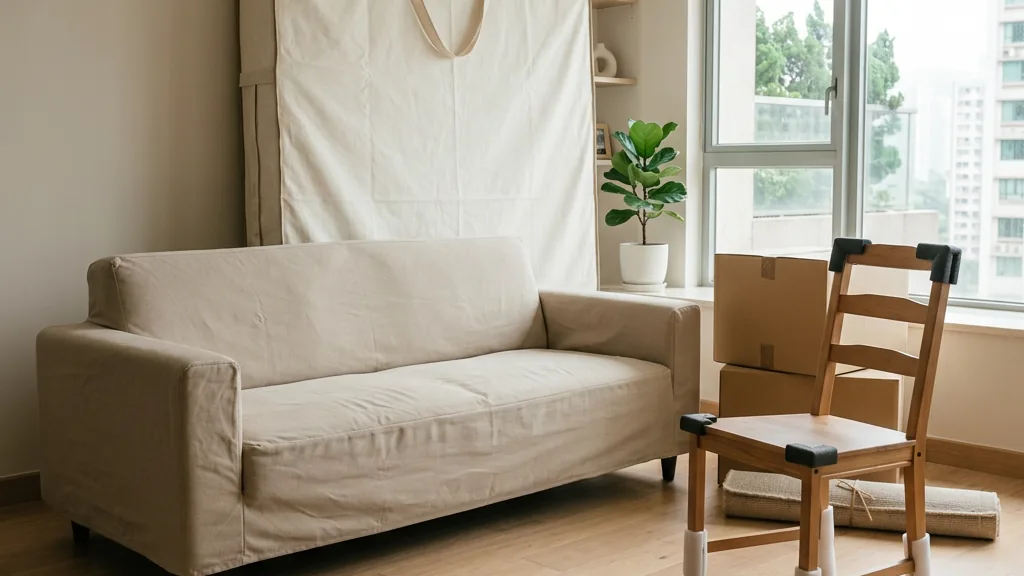
Excessive reliance on loft beds and custom built-in furniture can constrain living areas. Prioritize spatial flexibility by decluttering and moving infrequent items to external storage facilities.
In urban life where every inch of land is worth gold, owning a cozy little house of your own is the goal many people strive for. However, when faced with a limited living area, we always hope to squeeze more possibilities out of the limited space. For many people, when moving into a new home or renovating an old one, the preferred decoration plan is often to "build a loft bed" and "custom-made floor-to-ceiling large cabinets."
We look forward to hiding all the clutter out of sight through these tailor-made multi-functional furniture, creating a clean, crisp, minimalist home. However, after the whole house renovation is completed and we have lived there for a while, many people begin to feel a hint of stuffiness and constraint. The storage artifacts that were supposed to save space do not seem to have brought the lightness and freedom imagined.
Can loft beds and custom-made furniture throughout the house really save small units perfectly? While pursuing space maximization, what price have we paid invisibly?
Visual and psychological space eroded by storage boxes and high cabinets
While custom furniture increases storage capacity, its physical volume can occupy significant floor space and interfere with natural light and air circulation. A high-density furniture layout may cause a sense of confinement; we recommend planning furniture placement carefully based on your actual living needs.
High retrieval costs and neglected daily life flow
Loft beds and deep cabinetry often require complex retrieval steps. If accessing stored items is difficult, consider reorganizing them or moving infrequently used goods to an external storage facility to keep your home's daily circulation smooth.
Inflexible hard-decoration designs limit future life possibilities
Life is a dynamic process of change; our needs, interests, and even family structure will shift over time. Custom-made furniture throughout the house and loft beds are part of the "hard decoration," and once installed, they are extremely difficult to move or dismantle at will.
When you rely too much on hard-decoration storage to fill the space, the entire home system loses the flexibility to cope with the future. Whether you want to change furniture layout in the future, cultivate new interests (such as adding an electric piano or outdoor sports equipment), or welcome new family members, these fixed and large wooden structures will become obstacles to flexible adjustments. The mentality of overly pursuing "filling the space" actually limits the possibilities and fluidity of future life.
Flexible resource allocation maintains the breathing space and white space of the living environment
The true value of a living space does not lie in how many things it can cram, but in how much comfort, relaxation, and freedom it can provide for the people living in it. To save a small unit, the core may not be to constantly add storage containers, but to establish a lifestyle subtraction method with more flexibility and quality.
Leaving limited home area for yourself and your family in the present, maintaining a moderate "white space" in the space, allows light and air to flow freely, creating a textured atmosphere that truly relaxes people. For those items used with high frequency, keep a reasonable storage position; and for those items used with low frequency but still having emotional value or seasonal practical functions, consider more flexible diversion schemes, allowing the core living area to recover its freshness and smoothness.
Seeking help from a professional team
When facing the space considerations of a small unit, and the living quality at home has been substantially affected, and it still feels narrow no matter how you customize the furniture, shifting your perspective moderately outside your home and flexibly using external storage facilities may be a compromise plan that can balance life texture and material management. We provide professional space planning consultation and diversified storage services, equipped with all-weather environmental monitoring and strict protection, which can provide a safe, clean extended space for your seasonal materials or important collections that are seldom used, helping you release precious home area and rediscover the white space and comfort of home. Welcome to contact our consultant team at any time to explore a more flexible and free urban life pace together.
One Plus One Storage Services
One Plus One Storage provides professional self-storage services, dedicated to offering citizens flexible, convenient, and reasonably priced storage solutions. We have an in-depth understanding of the land supply shortage in Hong Kong's urbanization process, as well as the status quo where changing work patterns have led to an increasing demand for home space among citizens. Therefore, we created One Plus One Storage to respond to these growing needs.
Our storage units cover a variety of sizes; whether clients need small storage spaces for personal items or large storage spaces for company documents or furniture, we can provide suitable solutions. In addition, our pricing is fair and transparent, and we offer flexible lease terms; whether for long or short-term leases, clients can flexibly choose according to their own needs.
Welcome to request a quote or inquiry: Click to contact us on WhatsApp
- Address: Room 16-17, 9/F, Nan Fung Commercial Centre, 19 Lam Lok Street, Kowloon Bay
- Phone: 3188 1889
- WhatsApp: 6928 9628
- Email:enquiry@opostorage.com
Feel free to contact us at any time, and let us provide you with professional storage services!
Practical storage and planning
- Assess daily traffic flow and remove bulky, fixed furniture that hinders movement.
- Implement a decluttering strategy by transferring seasonal items or collectibles to external storage.
- Maintain flexible interior layouts and consult professional designers to improve home circulation.
Frequently asked questions
How can I tell if my home is over-storage?
If indoor pathways are obstructed, natural light is blocked, or accessing items requires significant effort, your storage design may be negatively impacting your quality of life.
Beyond removing furniture, how can I ease space congestion?
Moving low-frequency items to external storage can reduce object density in your home, allowing for better airflow and smoother daily routines.
Further reading: US National Archives guidance on storing papers and photographs