
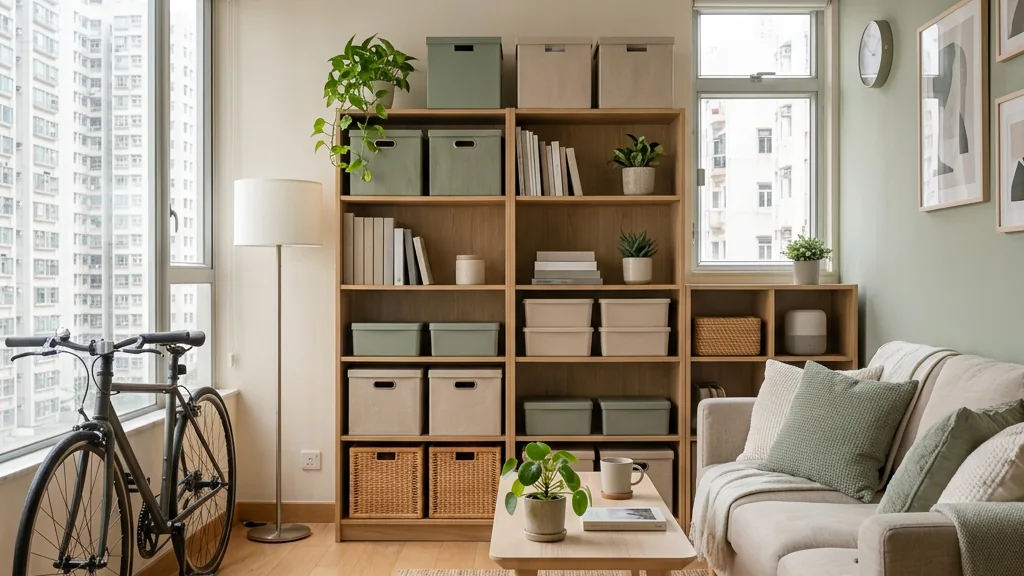
Sort albums and keepsakes then store them in dry, well-ventilated areas using sturdy boxes and protective padding. Consult professionals for damaged items.
Albums, frames, old photos, and memory books are often more than just items; they carry family memories. With limited living space in Hong Kong, many people keep albums on top of cupboards, under beds, in storage cabinets, or in cardboard boxes. This seems convenient in the short term, but if subjected to dampness, pressure, or dust for long periods, photos and paper materials may yellow, deform, or stick together. Proper sorting and storage helps preserve memories and makes home space more organized.
Sort your albums and photos first
Before storing albums, you can categorize them by year, family member, trip, wedding, graduation, or stages of a child's growth. If photos haven't been organized for many years, it may be time-consuming to process them all at once; you can start by dividing them into three categories: 'frequently viewed', 'needs to be saved', and 'can be further filtered'. Sorting before storing makes it more convenient when you need to retrieve a specific album or memory later, rather than having them all mixed together.
Avoid placing them in damp locations
Hong Kong's weather is humid, so albums are not suitable for long-term placement near windows, bathrooms, kitchens, or in cardboard boxes on the floor. Humid environments can soften photo paper, mold sleeves, and even make photos stick to each other. If your home has high humidity, you can avoid placing albums tightly against walls or deep inside the bottom of cupboards. Keeping them dry and ventilated during storage is generally better for preserving paper-based memories.
Keep photos clean and dry before boxing
Before boxing, check the condition of your albums or photos. If an item was in a damp area, let it air dry in a well-ventilated place. Do not attempt to force apart photos that are stuck or damaged; consult a professional conservator for assistance.
Packaging materials must be appropriate
Albums have a certain weight; if all are placed in ordinary thin cardboard boxes, the boxes may deform after long-term stacking. You can choose thicker storage boxes or plastic boxes with lids to reduce the chances of moisture and pressure. Photo frames, album hard covers, and memory book edges can be separated with bubble wrap, protective paper, or soft pads to avoid friction during transport. If you must use cardboard boxes, you can add plastic bags or moisture-proof materials inside as simple protection.
Do not compress albums too tightly
Albums and paper souvenirs should not be over-compressed. If the box is too full, it is easy to tear the cover or deform the photo paper when taking them out. It is ideal to keep appropriate space in the same box so that albums can be placed flat or upright, not pressed by heavy objects for a long time. This is especially true for thick albums, wedding albums, old-fashioned albums, and styles with adhesive pages, which require more avoidance of long-term heavy pressure.
Frames and glass surfaces must be protected separately
Frames are usually more susceptible to damage during transport or storage than albums. Glass surfaces, wood frames, metal frames, and frame stands all need extra protection. Before storage, wrap them with soft cloth or protective paper, and then secure the corners with bubble wrap. If multiple frames are put in the same box, it is recommended to add partitions in between to avoid glass-to-glass collisions. Frames should also not be placed at the very bottom to avoid being crushed by other heavy objects.
Labels help with retrieval later
After storing albums, the biggest fear is having to open every box when you want to find a certain memory later. After putting them in boxes, mark the content on the outside, such as 'Family Album', 'Wedding Album', 'Childhood Photos', 'Travel Photos', or 'Old Frames'. Labels don't have to be complicated, but they should be clear and easy to understand. If you have many storage boxes, you can also number them simply to facilitate retrieval according to your needs later.
Digital backups provide extra security
Paper photos have commemorative value, but they are also easily affected by humidity, time, and transport. If you have particularly important photos, you can consider making digital backups first. Scanning or taking photos for preservation may not fully replace the original photos, but it can serve as extra protection. Especially for old family photos, wedding photos, photos of elders, and commemorative photos that exist as only one copy, it will be more reassuring after backing them up.
Consider temporary storage if home space is limited
If your home storage space is limited, and albums don't necessarily need to be flipped through frequently, you can consider temporarily storing some albums and souvenirs in a more suitable storage space. This can free up space inside cupboards and under beds, reducing the accumulation of clutter at home. Just ensure you sort, pack, and label them before storage, and it will be clearer when you need to retrieve them later.
Seeking Professional Support
If you have a large number of albums, frames, memory books, and old photos, or if you are moving, renovating, or organizing old items, you can consider seeking the help of a professional team. Professional storage teams generally help arrange suitable storage methods based on the number of items, storage time, and packaging needs. Album memories may not need to be before your eyes every day, but proper storage can reduce the chances of moisture, pressure, and loss, allowing precious memories to be kept in a more organized way.
One Plus One Storage Services
One Plus One Storage provides professional mini-storage services, committed to offering flexible, convenient, and reasonably priced storage solutions. We deeply understand the challenges of land supply shortages in Hong Kong's urbanization process and the shift in working models increasing demand for residential space. Therefore, we founded One Plus One Storage to address these growing needs.
Our mini-storage units come in various sizes; whether you need a small space for personal items or a large one for company documents or furniture, we offer suitable solutions. Furthermore, our pricing is fair and transparent, with flexible rental terms for both long and short-term needs.
For quotes or inquiries: Click to contact us on WhatsApp
- Address: Room 16-17, 9/F, Nan Fung Commercial Centre, 19 Lam Lok Street, Kowloon Bay
- Tel: 3188 1889
- WhatsApp: 6928 9628
- Email:enquiry@opostorage.com
Contact us anytime for professional storage services!
Practical storage and planning
- Categorize photos and keepsakes by date or theme to separate frequently viewed items.
- Store items in sturdy containers, using protective paper to prevent friction between surfaces.
- Label boxes clearly and keep them dry; consult professional restorers for damaged or fragile items.
Frequently asked questions
What should I do if photos are stuck or stained?
Do not attempt to separate or clean them yourself as this may cause further damage; seek assessment from a professional conservator.
Are cardboard boxes suitable for long-term storage?
Cardboard can deform or retain moisture; plastic storage boxes are recommended for better protection and structural stability.
Further reading: US National Archives guidance on storing papers and photographs; Canadian Conservation Institute guidance by material