
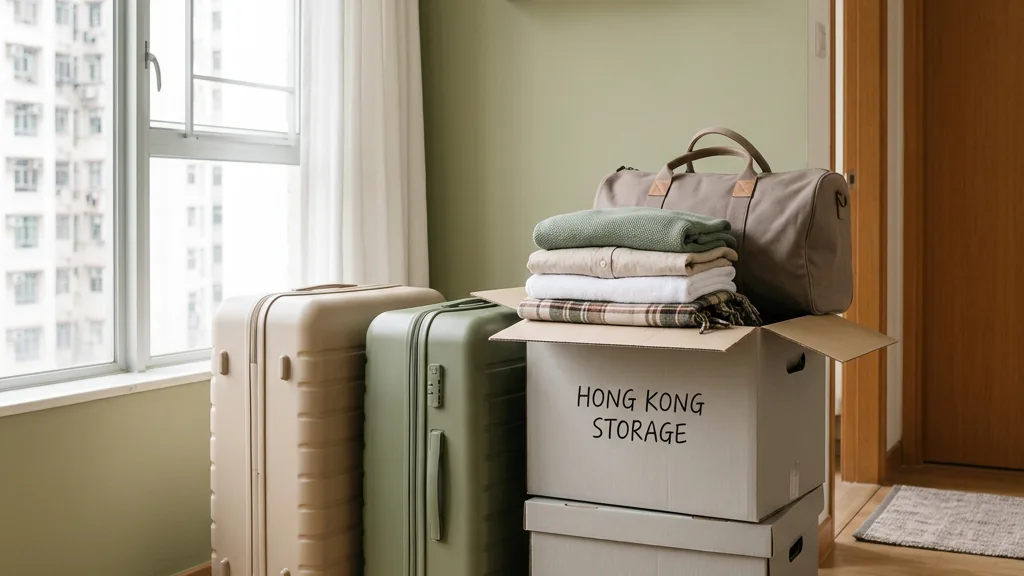
Utilize a three-tier categorization method for your belongings: carry-on essentials, transition items, and long-term freight. Digitalizing documents and planning storage space ahead of time minimizes anxiety and maintains your quality of life during transition periods.
In Hong Kong, whether it is experiencing a cross-district move (such as moving from a remote estate in the New Territories to the urban area, or just signing a lease for a youth apartment or a private estate), or planning a cross-border emigration to start a brand new life, moving house is never a simple and light task of 'stuffing things into boxes and moving people over.'
For most people, the most painful and anxiety-inducing moments are often not the day of packing, but that embarrassing empty period when 'the large cargo has already been shipped (or the old lease has been terminated and handed over), but the new home has not been fully decorated yet'—which is the so-called 'long-distance relocation buffer period.' During this period, you may have to face luggage scattered among sea freight containers, temporary storage units, and carry-on luggage, and even spend several days or even weeks in a house with four empty walls, without even a sofa or mattress.
How should you prepare your luggage before cross-district moving or emigration? How can you smartly get through this helpless transition period? The following is a comprehensive in-depth breakdown of four core strategies and practical layout techniques for you.
Why is the 'vacuum period' the most feared aspect of cross-district moving or emigration?
Before exploring specific techniques, we first need to understand why the 'relocation buffer period' becomes a nightmare for many families:
Logistics time lag and misalignment: If it is cross-border emigration, sea freight containers often take several weeks or even months to reach their destination; if it is a local cross-district move, it is often impossible to seamlessly connect furniture and luggage due to renovation delays or mismatches in the handover time between the old and new residences.
The despair of 'not being able to find anything': If you do not categorize clearly during packing, when you want to find a nail clipper, an important contract, or a child's commonly used medicine, and you find them all sealed deep in overlapping boxes, this kind of chaos can easily trigger anxiety.
A sharp decline in quality of life during the transition period: Sleeping on hard floors, having all your tableware in boxes and having to order takeout every day, not being able to find clothes to change into... these inconveniences will instantly diminish the excitement of just arriving in a new environment.
The 'Three-Tier Pyramid Categorization Method' for Luggage Preparation
Facing a huge amount of luggage, you definitely cannot stuff everything into the same box 'all in one pot.' A smart approach is to strictly split all items into three tiers:
Tier 1: 'Survival-Level' Carry-on Luggage (to handle the first 3 to 7 days after arrival)
Core Definition: Whether it is a backpack or a carry-on suitcase, this part of the luggage must not leave your side and must move with you.
Loading List:
Documents and Finances: Passport, ID card, visa documents, bank cards, new home contract, and important cash.
Personal Medical Supplies: Commonly used medicines, prescription drugs for chronic illnesses, first-aid kits.
Basic Clothing and Toiletries: 3 sets of change of clothes, undergarments, light towels, toothbrush, toothpaste, and other basic washing and grooming supplies.
Electronic Devices and Chargers: Mobile phones, computers, work essentials, and corresponding adapters (especially when emigrating abroad).
Tier 2: 'Transition Period' Medium-sized Luggage (to handle a 1 to 3-month buffer period)
Core Definition: This part is used to handle daily needs before the large cargo arrives or when the new home is undergoing fine-tuning, usually packed in easy-to-access transparent plastic boxes or medium-sized suitcases.
Loading List:
Basic clothing for four seasons: Prepare a reasonable amount of replacement clothing according to the local climate.
Simple daily tableware: A few sets of non-breakable eco-friendly tableware, water cups, a small knife, and a basic can opener.
Basic cleaning and consumables: Garbage bags, a few rolls of toilet paper, a small bottle of all-purpose cleaner, and rags.
Tier 3: 'Long-distance Sea Freight / Large Cargo' Heavy Luggage (mainstay for long-term residence)
Core Definition: Large furniture, seasonal clothing, books, electrical appliances, and non-urgent souvenirs. When packing these items, consider protection needs and hand them over to a professional logistics company. For precious or delicate objects, consult with appropriate conservation or repair professionals.
Four Practical Techniques for Transition Period Space Configuration
When you step into your new home with your carry-on luggage and transition boxes, facing an empty room, how can you maintain basic life operations with the least amount of effort?
Technique 1: Create a 'Temporary Core Living Area'
Operation Method: Do not try to clean or decorate the entire house at the beginning. Concentrate firepower on getting one area done first (such as the future master bedroom or a corner of the living room), spread out a comfortable mattress or camping sleeping pad, and set up a temporary 'core base.' As long as this area is clean and fully functional, the sense of security in your mind will increase significantly.
Technique 2: Make Good Use of 'Transparent Transition Boxes' / Labeling Numbers
Operation Method: For boxes in the transition period, it is highly recommended to use transparent plastic folding boxes, or attach clear labels with large characters on the front and top of traditional paper boxes (e.g., 'Kitchen-Urgent Tableware', 'Master Bedroom-Change of Clothes'), or even number them and save a 'luggage list correspondence table' on your mobile phone. This way, you don't need to open the box to find what you need at a glance.
Technique 3: Minimalism and the 'Disposable Principle'
Operation Method: During the one or two weeks of the transition period, deliberately implement 'minimalist living.' Use eco-friendly paper plates that can be discarded after use, or simple cleaning, and replace them with folding tables and chairs when furniture is insufficient. Do not rush to buy a large amount of large furniture during the buffer period. Wait until the large cargo arrives and you have a real concept of the space size of the new home before adding them; this can avoid blind consumption and space waste.
Technique 4: Properly Backup Digital Documents and Physical Certificates
Operation Method: During the process of cross-district relocation or emigration, paper contracts, lease agreements, insurance policies, etc., are very easily lost in the chaos. Before departure, be sure to scan and upload all important documents to a cloud drive, and save key contact phone numbers (such as the new landlord, property office, and moving company person in charge) in a mobile phone memo that is easy to reach.
Seeking professional team assistance
While precise luggage categorization and transition strategies can reduce relocation anxiety, tasks like dismantling heavy furniture, long-distance transport, and deep cleaning can be demanding. When you need assistance with moving, packing, storage, or cleaning, our professional team is available to help, relying on practical experience to protect your belongings and ensure a smooth relocation.
One Plus One Storage Services
One Plus One Storage provides professional mini storage services, dedicated to offering citizens flexible, convenient, and reasonably priced storage solutions. We have a deep understanding of the land supply shortages in Hong Kong's urbanization process, as well as the current situation where changes in work patterns have led to an increasing demand from citizens for home space. Therefore, we established One Plus One Storage to respond to these growing needs.
Our mini storage units cover various sizes; whether customers need small storage space for personal items or large storage space for company documents or furniture, we can provide suitable solutions. Furthermore, our pricing is fair and transparent, and we offer flexible rental periods, allowing customers to choose flexibly based on their own needs, whether for long or short-term rentals.
Welcome to request a quote or make an inquiry: Click here to contact us on WhatsApp
- Address: Room 16-17, 9/F, Nan Fung Commercial Centre, 19 Lam Lok Street, Kowloon Bay
- Phone: 3188 1889
- WhatsApp: 6928 9628
- Email:enquiry@opostorage.com
Feel free to contact us at any time, and let us provide you with professional mini storage
Practical storage and planning
- Pack essential documents, medical supplies, and basic daily items in your carry-on to maintain stability immediately upon arrival.
- Categorize transition items using labeled, accessible containers with a corresponding inventory list for quick retrieval.
- Engage professional moving teams for large furniture and heavy cargo to ensure items are handled securely and efficiently.
Frequently asked questions
How should I handle transition boxes if my moving date is unexpectedly delayed?
Consult professional storage providers in advance regarding flexible leases and short-term storage options to keep your items safe.