
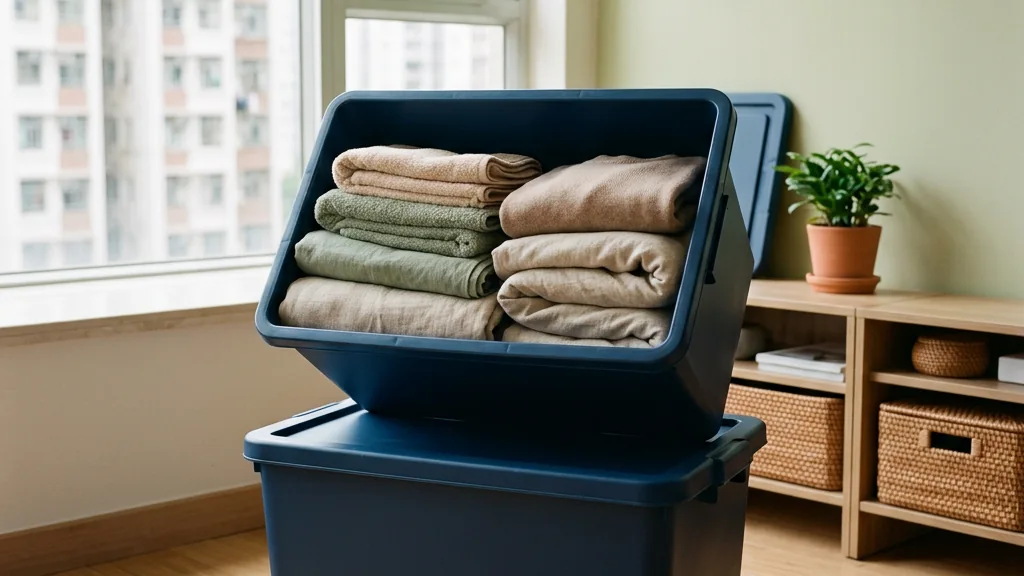
Self-storage offers flexible autonomous access suitable for large items, while door-to-door services provide convenient pickups, ideal for smaller goods and reduced transportation time.
Whenever your home is being renovated, you often face the trouble of a house full of clutter. At this time, renting self-storage becomes an ideal solution, without needing to constantly move items. Whether it's large furniture or small home goods, everything can be stored, making staying in short-term rental units much more convenient.
So, what exactly is the difference between traditional self-storage and emerging door-to-door storage boxes? Also, which door-to-door storage box company has the best value? One Plus One Storage has organized different door-to-door storage box companies for you, comparing various discounts!
Self-storage vs. door-to-door storage
What is "self-storage"?
Self-storage is a service that provides flexible storage space, usually used for short-term or long-term storage of personal items. Here are some main features and functions of self-storage:
1. Storage space
Self-storage provides storage units of various sizes, suitable for storing different types and quantities of items, such as furniture, appliances, seasonal supplies, documents, etc.
2. Flexibility
Self-storage usually allows monthly rentals, making it convenient for users to adjust rental periods according to needs, suitable for situations needing temporary storage, such as moving, renovation, or traveling.
3. Security
Most self-storage facilities provide security measures, such as 24-hour monitoring, access control systems, and personal locks to ensure the safety of stored items.
4. Convenience
Many self-storage services provide self-access, making it convenient for users to enter and exit storage space at any time. Additionally, some service providers also provide door-to-door pickup and delivery services, making it more worry-free for users.
5. Diverse uses
Self-storage is not only suitable for personal use but also suitable for enterprises to store inventory, equipment, or documents, capable of meeting various storage needs.
What is "door-to-door storage"?
"Door-to-door storage boxes" is an emerging storage service that combines the concept of self-storage with the convenience of door-to-door pickup and delivery. Here are the main features of door-to-door storage boxes:
1. Convenience
Door-to-door storage box service providers go directly to the customer's residence or designated location, delivering the storage boxes to the user's hands; users do not need to go to the warehouse specifically.
2. Flexible storage solutions
Users can rent different quantities and sizes of storage boxes as needed and store various items in the boxes, including furniture, appliances, seasonal items, etc.
3. Door-to-door pickup and delivery
When users need to store items, the service provider arranges to pick up the boxes and take them back to the warehouse. When users need to retrieve items, the service provider can also deliver the boxes back to the designated location.
4. Security
Door-to-door storage boxes are usually equipped with security locks and monitoring systems to ensure the safety of items stored in the boxes.
5. Suitable for various needs
Door-to-door storage boxes are particularly suitable for people needing temporary storage, such as for moving, renovation, travel, or enterprises needing to store inventory and equipment.
Precautions for renting storage
Precautions for renting self-storage
Storage area:
Storage units are usually divided into gross area and usable area; users need to understand this to choose the right storage unit.
Deposit requirements:
Most self-storage facilities require a deposit of 1 to 2 months' rent.
Fire safety:
Some self-storage facilities may have issues with failing to meet fire safety standards; it is recommended to visit in person.
Item storage:
When storing items, it is recommended to use appropriate packaging containers and protective materials to ensure items remain in stable condition during the rental period.
Locks and access cards:
Users need to bring their own padlocks, and access cards often have extra fees.
Insurance issues:
Some storage facilities may not provide full coverage; if storing valuable items, it is recommended to consider purchasing insurance to ensure protection.
Rental differences:
Rental differences are large; rentals in the Hong Kong Island district are usually higher than the New Territories, and rentals within the same area can also vary by a factor of two.
Precautions for renting door-to-door storage
Minimum consumption requirements:
Different service providers may set minimum consumption requirements, with amount differences up to 4 times.
Insurance coverage:
Most door-to-door storage monthly fees already include insurance coverage, with compensation up to $1,000 to $2,500 per box.
Item access restrictions:
Users cannot retrieve or store items at will, and they will not know the specific location of the central warehouse.
Storage box provision:
Service providers will provide storage boxes for free, convenient for users to store items.
Comparison of Hong Kong door-to-door storage services and prices
One Plus One Storage introduces the standard storage box fees, minimum consumption, and compensation amounts for many door-to-door storage box companies. Each company's minimum consumption standard varies, and usually, a 3-month rental period is required. Most storage box companies provide boxes for free and collect them after they are full, but if boxes need to be returned home after the rental period ends, extra fees will be charged.
Door-to-door storage boxes often launch combination plans and monthly rental discounts, such as renting for 6 months and getting 1 month free, renting 5 boxes and getting 1 box free, or renting different sizes of boxes at the same price, which makes price comparisons more difficult. Before comparing prices, it is recommended to plan the actual number of boxes needed and the rental time.
Door-to-door storage | Monthly box rental | Minimum consumption | Shipping fee | Compensation per box |
|---|---|---|---|---|
One Plus One Storage | $38 (3-month storage plan) $35 (6-month storage plan) | $180 | Free delivery Free first-trip pickup and delivery service Free round-trip door-to-door delivery once every two months | $1,000 |
Boxful | $39 | 3 months | Free delivery First trip to warehouse is free Return delivery $29 + $15 per box | $1,000 |
Spacebox | $54 (3-month storage plan) $49 (6-month storage plan) | $180 | Free delivery to warehouse $15 per trip per box | $1,000 |
Redbox | $49 | None | Free delivery Free entry to warehouse Return delivery $170 | $1,000 |
Square Box | $47 | $201 | Free delivery Entry to warehouse $25+$15 per box 6-month rental free entry to warehouse Return delivery $25+$15 per box | $1,000 |
100Storage | $48 | $500 | Free delivery Free entry to warehouse Return delivery $88 + $18 per box from the 6th box | $1,000 |
Box-easy | $42 | 3 boxes | Free delivery Free entry to warehouse Return delivery $100 + $40 per box | $1,000 |
In summary, door-to-door storage box service provides a flexible and convenient storage solution for modern people. Whether it is for moving, short-term rental, or enterprise storage needs, this service can effectively reduce the pressure of piled-up items. Users can choose the appropriate number of storage boxes and rental period, and enjoy the convenience of door-to-door pickup and delivery. Additionally, many service providers offer discount plans, allowing users to solve storage problems in a more cost-effective way. Choose the right door-to-door storage box service to make life easier and space tidier.
Practical storage and planning
- Assess the volume and quantity of items to choose the appropriate storage model.
- Verify service contracts and insurance coverage provided by the storage operator.
- Consult professional conservators for advice on storing fragile or highly valuable items.
Frequently asked questions
Why do prices and promotional plans for storage services frequently change?
Service providers adjust pricing based on market competition; past information is historical, so contact providers for current rates.
What are general safety suggestions for storing items?
Use sturdy containers for packaging and maintain a tidy environment; for long-term storage, consult professional preservation institutions regarding material care.
Further reading: US National Archives guidance on storing papers and photographs; Canadian Conservation Institute guidance by material